

In a 2024 report, the Finnish Competition and Consumer Authority (KKV) found that the Finnish market for small-animal veterinary care had concentrated heavily through acquisitions over the previous ten years and was led by two chains owned by foreign private equity investors — Evidensia and Vireä. Measured by 2023 revenue, Evidensia had 40–50% of the private small-animal market nationally and Vireä 10–20% (KKV gives ranges to protect business secrets). Eläinklinikka Saari is the only family-owned small-animal clinic in Vaasa, and we want to explain why that matters to us.
Chains in Finland
Evidensia belongs to the international IVC Evidensia group, whose largest shareholder is the Swedish private equity firm EQT. In a deal announced in February 2021, the US investment firm Silver Lake took a minority stake and Nestlé increased its own. The deal valued the whole group, debt included, at about €12.3 billion. When KKV carried out its study in 2024, Evidensia had 47 locations in mainland Finland. Vireä, part of the Vetopia group, had 13 locations offering small-animal care; KKV named the Danish private equity firm Axcel as Vireä’s largest owner. Evidensia is particularly strong in hospital care: by KKV’s definition, 13 of the 18 private small-animal hospitals in mainland Finland belonged to Evidensia, and however hospitals were defined, its national share of that market was over 70%.
Impact on Prices
KKV’s November 2024 report examined prices after Evidensia bought Omaeläinklinikka, then the second-largest chain, in 2021. Between September 2021 and April 2024, the list prices published by Evidensia’s clinics and the former Omaeläinklinikka clinics rose by 28% on average, while consumer prices rose by 15% and Statistics Finland’s price index for veterinary services by 13%. KKV concluded that the results indicate the acquisition led to a significant price increase. The 28% figure is an average across individual procedures, not the change in the cost of an average visit. Separately, household spending on veterinary and other pet services more than doubled in ten years, from €235 million in 2014 to €501 million in 2024 (Statistics Finland, preliminary figure for 2024). That is total spending, not prices: the number of dogs rose from about 450,000 in 2012 to an estimated 800,000-plus in 2023. KKV links rising costs to general cost increases and advances in veterinary medicine, as well as to market concentration and a lack of competition.
What Does Chain Ownership Mean for Care?
In our view, who owns a clinic shapes its priorities. In a report of 14 July 2023 on the concentration of the Finnish veterinary market, Yle quoted Mikko Turku, then chair of the Finnish Veterinary Association. He saw it as a challenge that large operators can strongly influence pricing and what kinds of treatment are given: when an instruction comes from the top, an individual vet may not be able to practise as independently as they should. This is his view as reported by Yle, not a finding of a regulator.
International Examples
The UK has seen similar consolidation. In its final report of 24 March 2026, the Competition and Markets Authority (CMA) found that six large groups own over 60% of UK vet practices, wholly or in part; in 2013, large groups owned about 10%. Between 2016 and 2023, average prices across the sector rose by 63%, against general inflation of 32%. The CMA also found that from January 2023 to July 2024, average prices at practices owned by five of the six groups (IVC Evidensia among them) were together 18.3% higher than at independent practices — a comparison that does not adjust for possible differences in quality or costs. In Sweden and Norway, a peer-reviewed study of 771 clinics by Egenvall and colleagues found that during 2023 the median price increase (in euros) was 15% at Evidensia clinics, 8% at clinics of the AniCura chain and 6% at independent clinics. As possible reasons for price differences between clinics, the authors list investment in equipment or staffing, spending on staff training, and different demands for profit.
Eläinklinikka Saari — A Conscious Choice
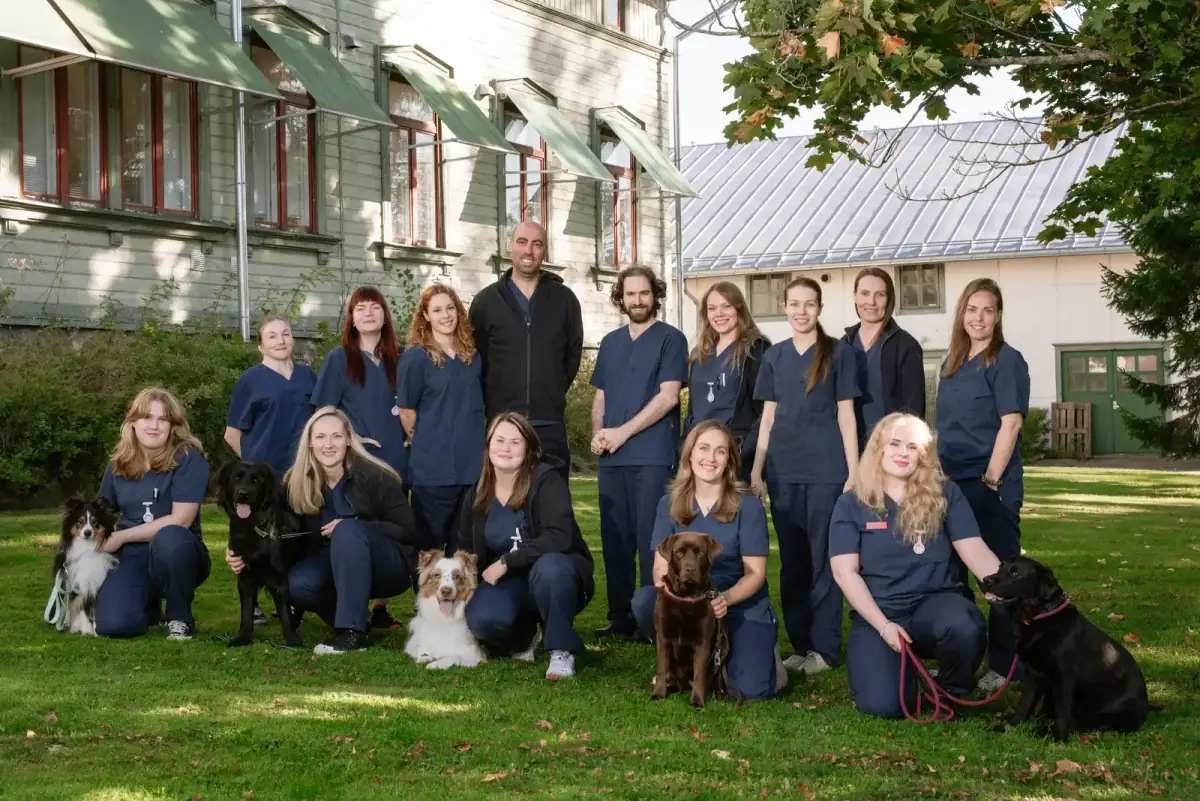
We have received several offers from chains wanting to buy our clinic, and we have chosen to remain independent. The clinic is owned by two veterinarians, Assaf Wydra and Pamela Kvarngård, not by outside investors. We set our own prices, and our profits stay in Vaasa. We are a small team, so our vets get to know you and your pet. When you choose an independent clinic, you also support local entrepreneurship and competition in a market that KKV expects to become further concentrated.
Sources
- Jankari A. ym. (2024): Selvitys pieneläinlääkäripalveluiden kilpailutilanteesta ja markkinoiden keskittymisen vaikutuksista. Kilpailu- ja kuluttajaviraston katsauksia 6/2024, 5.11.2024. kkv.fi
- Tilastokeskus (2026): Kotitalouksien kulutusmenot (COICOP2018), vuosittain, 1990–2025*, taulukko 15ag; luokka 09.4.5 Eläinlääkintäpalvelut ja muut lemmikkieläinpalvelut. Päivitetty 18.9.2026. pxdata.stat.fi
- EQT (2021): IVC Evidensia expands partnership to drive next phase of accelerating growth. Tiedote, 9.2.2021. eqtgroup.com
- Laakso L.-K. (2023): Työntekijät kertovat lähes monopoliaseman hankkineen Evidensian ongelmista: ”En enää kehtaa kertoa, missä olen töissä”. Yle, 14.7.2023. yle.fi
- Competition and Markets Authority (2026): Veterinary services for household pets market investigation – Summary of final report, 24.3.2026. assets.publishing.service.gov.uk
- Egenvall A. ym. (2025): Prices for veterinary care of dogs, cats, and horses in Sweden and Norway: comparisons between corporate chain, government-run, and independent clinics. Frontiers in Veterinary Science 12:1544996, 17.4.2025. doi.org