

What is a dog heart ultrasound?
A dog heart ultrasound, i.e. an ultrasound examination of the heart (echocardiography), is a painless examination in which the structure and function of the heart are seen in real time. It is the single most important examination for diagnosing heart disease in dogs and cats, assessing its severity and planning medication. At Saari Animal Clinic, heart ultrasounds are performed by veterinarian Leena Sandström, who is approved by the Finnish Kennel Club for official cardiac ultrasound examinations and holds the European ESAVS certificate in cardiology. The examination is performed on an awake dog lying on its side and usually requires no sedation. The heart ultrasound takes about 20–30 minutes, and the results are discussed with the owner immediately afterwards.
What is examined in a heart ultrasound?
A heart ultrasound measures the size of the heart chambers and atria, wall thickness and the contractility of the heart muscle. Doppler examination shows blood flow through the valves and identifies valve leaks and narrowings. Measurements are indexed to the dog's weight, so the results of a small and a large dog are comparable. A heart ultrasound detects, among others, degenerative mitral valve disease (MMVD), dilated cardiomyopathy (DCM), congenital heart defects such as patent ductus arteriosus (PDA) and aortic or pulmonic stenosis, as well as hypertrophic cardiomyopathy (HCM) in cats. The examination also tells whether the heart is already enlarged to the point where medication should be started.
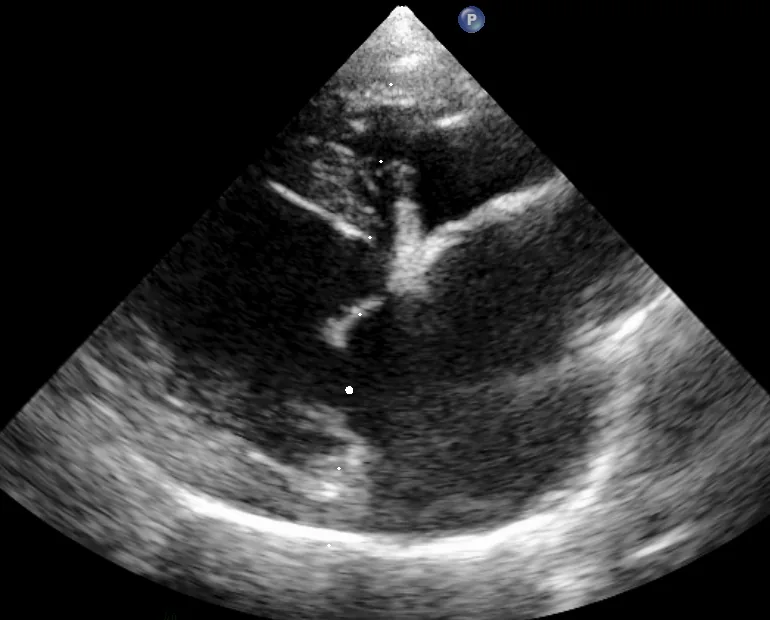
Official heart ultrasound for dogs (Kennel Club)
We perform the Finnish Kennel Club's official cardiac ultrasound examinations for breeding dogs. The official heart ultrasound is carried out by Kennel Club-approved examiner Leena Sandström, and the result is recorded in the Kennel Club database. The official examination includes listening to the heart (auscultation) and the ultrasound examination. Bring the dog's registration certificate; the identification (microchip) is checked before the examination. If your breed's PEVISA programme or breeding recommendation only requires cardiac auscultation, the official auscultation can also be performed by veterinarian Assaf Wydra. Both are on the Kennel Club's list of heart veterinarians.
Dog heart ultrasound price
Heart ultrasound prices at Saari Animal Clinic: cardiac ultrasound for suspected disease or follow-up 376–476 €, official cardiac ultrasound for a dog 403 € (under 40 kg) or 453 € (over 40 kg), official cardiac auscultation 80 € or 37 € during another visit. A cat heart ultrasound is priced the same as a dog's (376–476 €). Current prices are in our price list. Direct insurance billing is available for LähiTapiola, Agria and Pohjola customers.
When does a dog need a heart ultrasound?
A heart ultrasound is indicated when the vet hears a murmur, for example at a vaccination visit, when the dog coughs especially at night or at rest, tires faster than before on walks, breathes rapidly at rest (over 30 breaths per minute while asleep) or faints. For at-risk breeds — Cavalier King Charles Spaniel, Dobermann, Boxer, Great Dane, Irish Wolfhound and many small breeds — we recommend the first heart ultrasound before any symptoms appear. A heart ultrasound is also advisable before anaesthesia of a senior dog with a heart murmur, and before breeding.
How to prepare for a heart ultrasound?
No fasting is needed for a heart ultrasound unless sedation has been agreed separately. Give any heart medication as usual unless the vet instructs otherwise. A small patch of fur is shaved on both sides of the chest so that the ultrasound probe makes good contact with the skin. Bring previous cardiac reports and, for an official examination, the dog's registration certificate. A calm walk before the visit helps the dog relax on the examination table.
Cat heart ultrasound
The most common heart disease in cats is hypertrophic cardiomyopathy (HCM), in which the heart muscle thickens. It often progresses with no symptoms at all, and the first sign may be a sudden blood clot or breathing difficulty. A cat heart ultrasound is indicated if the heart has a murmur or gallop rhythm, the cat breathes rapidly or belongs to an at-risk breed (Maine Coon, Ragdoll, British Shorthair, Sphynx). We also recommend a heart ultrasound before anaesthesia if the cat has a murmur. A cat heart ultrasound is performed awake and takes about 15–20 minutes.
ECG and Holter monitoring
The heart ultrasound shows the structure of the heart, the ECG its electrical activity. An ECG identifies arrhythmias, and a 24-hour Holter recording at home catches rare rhythm disturbances that do not show on a short ECG. For a dog that faints, Holter monitoring is often the most important complementary examination to the heart ultrasound.
Most common heart diseases in dogs and cats
In dogs, mitral valve disease (MMVD, myxomatous mitral valve degeneration) is the most common heart condition and affects particularly small breeds such as the Cavalier King Charles Spaniel, Dachshund, and Poodle. Dilated cardiomyopathy (DCM) is typical of large breeds such as the Dobermann, Great Dane, and Boxer. In cats, hypertrophic cardiomyopathy (HCM) is the most common heart disease — it often progresses silently, and the first sign may be a sudden severe problem such as a blood clot or acute heart failure. Every one of these can be detected with a heart ultrasound and treated in time.
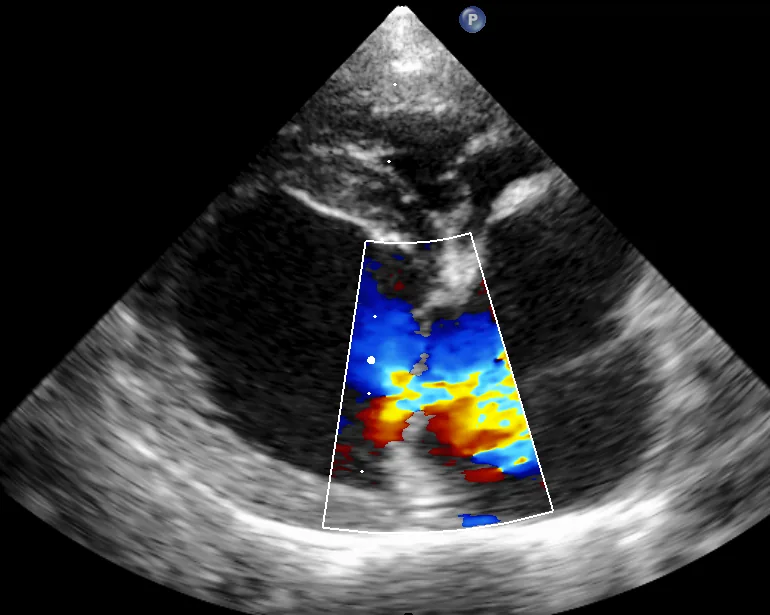
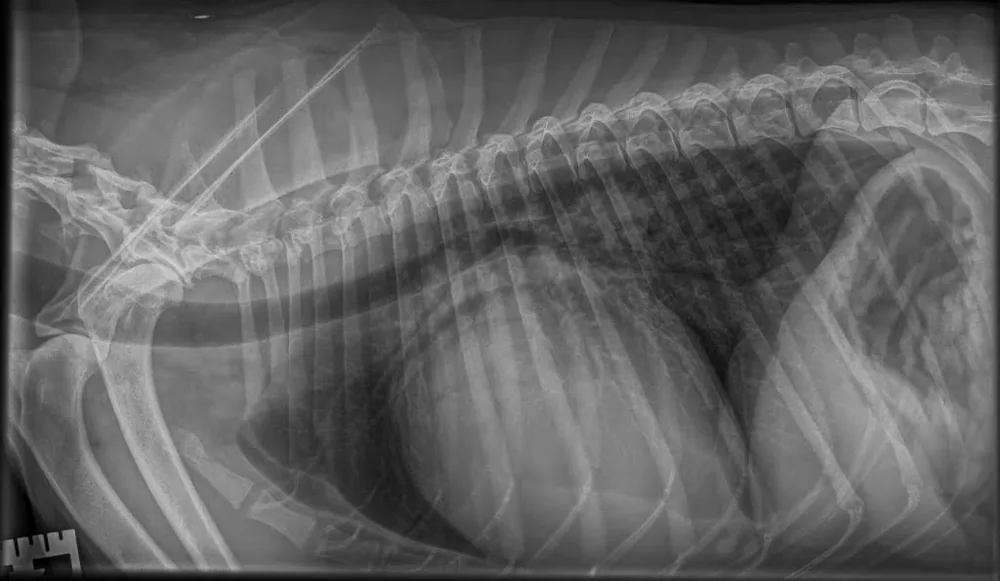
Medication and follow-up
When heart disease is diagnosed, the right medication and regular follow-up are essential. Pimobendan, ACE inhibitors, diuretics (furosemide, torasemide), and beta blockers are commonly used in treatment. Each pet gets an individual treatment plan based on the type and stage of the heart disease. Follow-up usually includes a repeat heart ultrasound, blood pressure measurement, blood tests (kidney values, electrolytes), and sometimes a chest X-ray. The follow-up interval depends on the stage of the disease — typically around every 12 months once the patient is stable.
Home care and quality of life
Home care plays an important role in the treatment of heart disease. It is good to monitor resting respiratory rate (normal is below 30 breaths per minute when asleep), exercise tolerance, appetite, and energy levels. Medications must be given consistently at the same times. Exercise should be kept moderate — strenuous activity is to be avoided, but gentle walks are good. A special cardiac diet can support treatment. With proper treatment, many pets with heart disease can live good-quality lives for years after diagnosis.
Frequently asked questions about dog heart ultrasound
How much does a dog heart ultrasound cost? A cardiac ultrasound for suspected disease or follow-up costs 376–476 €. An official Finnish Kennel Club echocardiogram for a dog costs 403 € (under 40 kg) or 453 € (over 40 kg). Official cardiac auscultation costs 80 €, or 37 € during another visit. Current prices are in our price list.
Does my dog need sedation for a heart ultrasound? Usually not. The heart ultrasound is performed on an awake dog lying on its side, and the examination is painless. Only a very restless dog receives light sedation, which does not affect the results.
How long does a heart ultrasound take? A dog heart ultrasound takes about 20–30 minutes, a cat's about 15–20 minutes. Results are discussed with the owner immediately after the examination, and a written report is provided.
Does Saari Animal Clinic have a Kennel Club-approved echocardiographer? Yes. Veterinarian Leena Sandström is approved by the Finnish Kennel Club for official cardiac ultrasound examinations and performs them at our clinic. Official cardiac auscultation can also be carried out by veterinarian Assaf Wydra. Both are on the Kennel Club's list of heart veterinarians.
How do I know if my dog has heart disease? Typical signs are coughing especially at night or at rest, tiring faster than before on walks, rapid breathing at rest (over 30 breaths per minute while asleep), fainting and a swollen abdomen. Often, however, the first sign is a heart murmur heard by the vet at a vaccination visit, even though the dog has no symptoms at all.
What is the difference between a heart ultrasound and an ECG? A heart ultrasound (echocardiography) shows the heart's structure, valve function and blood flow in real time — it is the primary examination for diagnosing heart disease. An ECG measures the heart's electrical activity and identifies arrhythmias. The examinations complement each other: ultrasound reveals structural changes, ECG rhythm problems.
How often should the heart ultrasound be repeated? For at-risk breeds we recommend the first heart ultrasound at 1–2 years of age and annually thereafter. For breeding dogs the interval is set by the breed's PEVISA programme or breeding recommendation. If the dog has been diagnosed with heart disease, the follow-up interval is agreed individually, usually every 3–12 months.
Does heart medication need to be given for life? Yes, heart-disease medication is usually lifelong. The role of the medication is to slow disease progression, ease symptoms and improve quality of life — it does not cure the disease itself. Suddenly stopping medication can lead to rapid deterioration.