

Chronic kidney disease (CKD), often called kidney failure, is one of the most common illnesses of older cats. Studies suggest that 30–40% or more of cats over 10 years old have some degree of it, although in most of them it is still at an early, mild stage. The kidneys lose function slowly and permanently, and because cats are good at hiding illness, the first signs are easy to miss. But kidney disease is not an immediate death sentence: with early diagnosis, a renal diet and the right treatment, many cats live for years with a good quality of life. This article explains which signs to watch for, how the disease is diagnosed and staged, how we treat it at Saari Animal Clinic, what to do when a kidney cat will not eat, and what to expect.
What are the symptoms of kidney disease in cats?
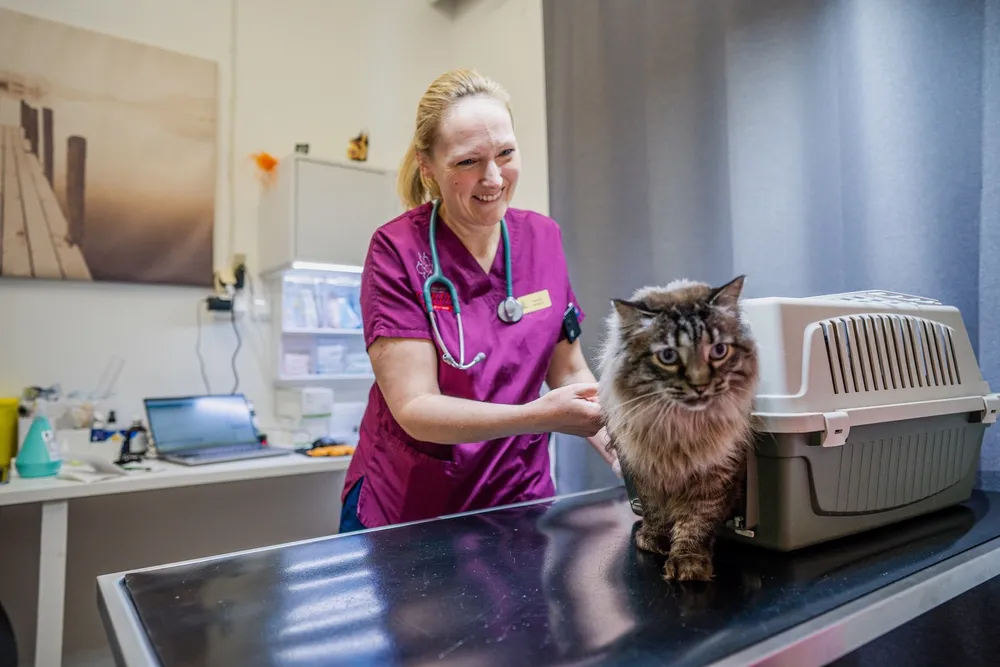
The earliest signs are subtle. The cat drinks more and urinates more — the clumps in the litter tray get bigger or more numerous, or the tray needs changing more often. It may become fussier with food and slowly lose weight and muscle, especially along the spine and back legs. As the disease progresses, other signs appear: a dull, unkempt coat, vomiting, constipation, bad breath, mouth ulcers, lethargy and pale gums from anaemia. Many cats simply become quieter, hide more and groom less, which owners easily put down to old age. Low blood potassium, which is fairly common in kidney cats, can cause muscle weakness: a cat that holds its head bent down towards its chest needs to be seen promptly. High blood pressure caused by kidney disease can damage the eyes — wide pupils that do not shrink in light, bleeding inside the eye or sudden blindness need a vet the same day. In a US study of 569 cats, weight loss was already under way three years before diagnosis. In a large UK study, about one in three cats had no signs of illness recorded when kidney disease was diagnosed.
What causes kidney disease in cats?
In most cats, chronic kidney disease is a slow scarring of the kidney tissue with age, and no single cause is found. Known contributors include an earlier episode of acute kidney injury, kidney infections, kidney and ureteral stones, high blood pressure and, less often, lymphoma of the kidneys. Polycystic kidney disease (PKD) is an inherited condition in which fluid-filled cysts gradually replace kidney tissue. It occurs mainly in Persians and related breeds such as Exotic Shorthairs; a DNA test is available, and the cysts can be seen on ultrasound. Dental disease is linked with kidney disease in cats, although it has not been proven to cause it.
Can a cat get kidney failure suddenly?
Yes. Acute kidney injury develops over hours or days, at any age, and is an emergency. In cats, the classic cause is lilies. All parts of true lilies (Lilium) and daylilies (Hemerocallis) are toxic to cats — the flowers, leaves, stems, pollen and even the water in the vase. Even a cat that only licks pollen off its fur can develop kidney failure. (Peace lilies and calla lilies are not true lilies: they can irritate the mouth but do not cause kidney failure.) Other causes include antifreeze (ethylene glycol), human painkillers such as ibuprofen, a stone blocking a ureter, a blocked urethra (a male cat that strains but passes little or no urine) and severe infections. If your cat may have chewed or licked any part of a lily, or come into contact with antifreeze, do not wait for symptoms. Call us at once, or the on-call vet on 0600 399 299 outside our opening hours, and bring the plant or a photo of it. Do not try to make your cat vomit at home: hydrogen peroxide, for example, can badly damage its stomach. With prompt treatment, most cats recover well; if treatment is delayed by 18 hours or more, kidney failure often develops and may be permanent or fatal. Once acute kidney injury has developed, the kidneys can often recover, but not always. In published studies of cats hospitalised for it — many of them severe cases on dialysis at specialist centres — about half died or were put to sleep before they could go home. Survivors can be left with lasting kidney damage.
How is kidney disease diagnosed in cats?
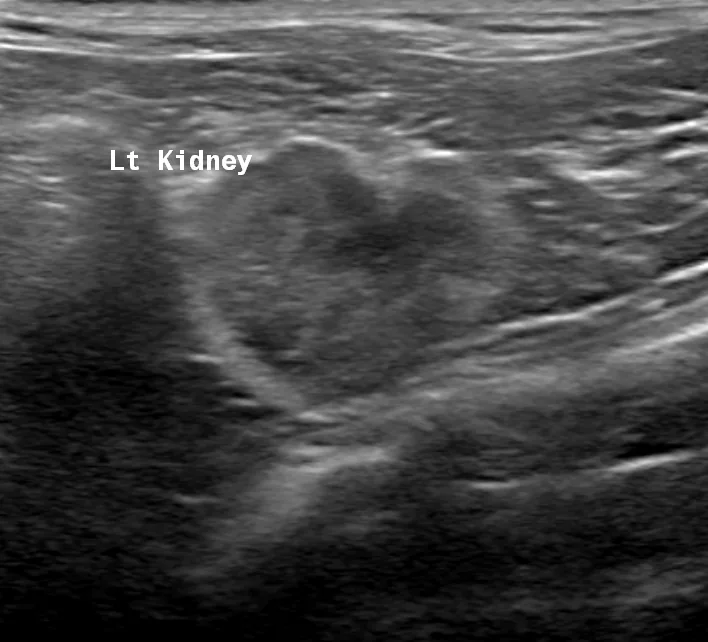
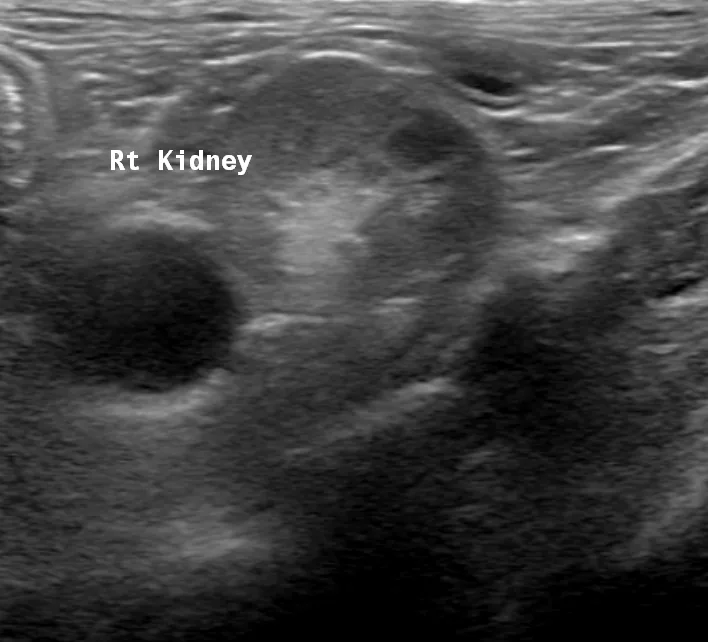
Diagnosis is based on blood tests, a urine test and a blood pressure measurement. The blood test measures creatinine, urea, phosphorus, potassium and red blood cells, and at our clinic also SDMA — a kidney marker that usually rises earlier than creatinine. In a small study of research cats with kidney disease, SDMA rose before creatinine in 17 of 21 cats, on average about 17 months earlier. Creatinine also depends on muscle mass, so in a thin older cat it can make the kidneys look better than they are. The urine test shows whether the kidneys can still concentrate urine, whether protein is leaking into it (UPC ratio) and whether there are signs of infection. In cats, a urine specific gravity below 1.035 is a warning sign; wet food can lower it a little, but a low value still needs checking. When a urine culture is needed, we take the sample straight from the bladder with a fine needle. We measure blood pressure in the awake cat, in a calm room, using cuffs made for cats. An ultrasound scan shows the size and structure of the kidneys and checks for stones, blockage, cysts or tumours. One raised value is not a diagnosis: chronic kidney disease is confirmed and staged from tests taken on at least two occasions while the cat is stable and well hydrated.
Why is the thyroid tested too?
An overactive thyroid (hyperthyroidism) is common in older cats and often occurs together with kidney disease. It increases blood flow through the kidneys and causes muscle loss, and both of these lower creatinine — so hyperthyroidism can hide kidney disease. That is why the thyroid hormone (T4) is tested in older cats with signs of kidney disease. It is also why kidney values are re-checked a few weeks (usually 2–4) after thyroid treatment starts: they often rise once the thyroid is under control. This rise usually does not mean the treatment harmed the kidneys; it reveals their true function. A thyroid level pushed too low, however, can itself reduce kidney function, so the dose is adjusted at follow-up checks. Treating the thyroid is still important, and the vet chooses the treatment and dose with the kidneys in mind.
What are the IRIS stages of kidney disease in cats?
The International Renal Interest Society (IRIS) classifies chronic kidney disease into four stages based on blood creatinine and SDMA, measured on at least two occasions while the cat is stable and well hydrated. Stage 1 (creatinine below 140 µmol/l, SDMA below 18 µg/dl): kidney function is close to normal, but there are other signs of kidney disease. These include SDMA that stays slightly raised, dilute urine with no other cause, protein in the urine or abnormal kidneys on ultrasound. Stage 2 (creatinine 140–250 µmol/l, SDMA 18–25 µg/dl): mild disease; the cat often has no signs, or only increased thirst. Stage 3 (creatinine 251–440 µmol/l, SDMA 26–38 µg/dl): moderate disease; poor appetite, weight loss and vomiting are common. Stage 4 (creatinine above 440 µmol/l, SDMA above 38 µg/dl): severe disease, with a high risk of uraemic crises — nausea, refusal to eat, weakness. If SDMA stays higher than the creatinine value would suggest, for example in a thin cat with little muscle, the cat is staged and treated one stage higher. Each stage also has sub-stages for blood pressure and protein in the urine, which guide treatment and how often we re-check.
How is kidney disease treated in cats?
Kidney disease cannot be cured, but its progress can often be slowed considerably, and the cat can feel well for a long time. The cornerstone is a renal diet (see below). If blood phosphorus stays high despite the diet, we add a phosphate binder, which is mixed into each meal. Fresh water must always be available. When needed, we give fluid therapy at the clinic, in our cat-only day ward: into a vein for cats that are dehydrated or in a uraemic crisis, or under the skin for some cats with advanced disease. Fluids are dosed carefully, because too much fluid can be harmful, especially in cats with heart disease. Other treatments depend on the stage and test results: medicine for high blood pressure and for protein in the urine (see below), potassium supplements when blood potassium is low, anti-nausea medicine, an appetite stimulant, and treatment for constipation, which is common in kidney cats. Anaemia is monitored at every check-up and treated case by case. Medicines that can harm the kidneys are avoided or used with care, and the doses of medicines cleared by the kidneys may need adjusting. Tell any vet who treats your cat that it has kidney disease. This matters for pain relief, because many older kidney cats also have painful arthritis, and their pain still needs treating. The product leaflets of anti-inflammatory pain medicines for cats advise against or restrict their use when kidney function is impaired. International feline guidelines, however, accept careful use in a cat with stable kidney disease, at the lowest effective dose and with regular check-ups; the vet weighs this for each cat. If a cat on such medicine stops eating, stop the medicine and contact us. Never give a cat human painkillers. The urine is checked for infection. An infection that reaches the kidneys can quickly worsen kidney function and is treated promptly, but bacteria in the urine of a cat with no signs of infection do not always need antibiotics. Dental disease is kept under control. We build an individual plan for each kidney cat and adjust it at every check-up.
How are high blood pressure and protein in the urine treated?
High blood pressure is found in roughly one in five to two in five cats with kidney disease seen in general practice, and in up to two in three in some referral studies. It can damage the eyes, heart, brain and the kidneys themselves. Treatment is usually started when the systolic blood pressure stays at 160 mmHg or above on repeated measurements, or straight away if the eyes, brain or heart are already affected. Cats are typically given amlodipine or telmisartan; amlodipine is preferred when the pressure is very high or the eyes or brain are affected, because telmisartan has not been proven to work in those cats. If the urine protein:creatinine ratio (UPC) stays above 0.4, the cause is investigated. A medicine that blocks the renin–angiotensin system — telmisartan or benazepril — is then given together with the renal diet. Values between 0.2 and 0.4 are monitored closely, and treatment can be considered if they persist. All three medicines are licensed for cats: amlodipine for high blood pressure, benazepril for protein in the urine, and telmisartan for both. Unless the eyes or brain are in immediate danger, dehydration is corrected first, because in a dehydrated cat these medicines can make kidney function drop sharply. Blood pressure, urine protein and kidney values are re-checked after each change of dose.
What should a cat with kidney disease eat?
A therapeutic renal diet is the treatment with the best evidence behind it. In two non-randomised studies, cats that ate a renal diet lived more than twice as long as cats that did not (a median of 633 versus 264 days in one of them). In a randomised trial in cats with stage 2–3 disease, none of the cats on the renal diet had a uraemic crisis, compared with about a quarter of those on ordinary food. Renal diets are low in phosphorus and contain moderate amounts of high-quality protein. They have added omega-3 fatty acids, potassium and B vitamins, and help counter the acid build-up that kidney disease can cause. Wet food is preferable because it also provides water — many kidney cats are mildly dehydrated all the time. Encourage drinking, too: several water bowls away from the food and the litter tray, a fountain, or a little extra water mixed into wet food. The vet will advise when to start the renal diet — usually from stage 2; it is easier to introduce while the appetite is still good. In some cats whose blood phosphorus is still normal, a renal diet can raise blood calcium, so calcium should be checked after the switch. Never start a renal diet while the cat is nauseous or in hospital: the cat can link the new food with feeling sick and refuse it afterwards. For the same reason, give tablets in a separate treat rather than hiding them in the renal food (phosphate binders are the exception: they are mixed into each meal as instructed). Switch foods gradually over several weeks, mixing the old food with the new. Never force a renal diet on a cat that refuses it: eating something is more important than eating the perfect food. We sell Royal Canin renal diets at the clinic, wet and dry, in several flavours and textures, so there is usually one your cat will accept. A home-made renal diet is possible only when it is formulated by a veterinary nutritionist — an unbalanced home diet can do more harm than good.
My kidney cat won’t eat — what can I do?
Poor appetite is one of the most common problems in kidney cats, and it is often caused by nausea rather than fussiness. A cat that has eaten clearly less than usual for a couple of days, or nothing at all for a day, should be seen: going without food is dangerous for cats, and nausea can be treated. At home, offer small, fresh portions several times a day. Warm the wet food to body temperature to bring out its smell, and try different textures, such as pâté, chunks or dry food. Use a wide, shallow bowl in a quiet place. Anti-nausea medicine is often the first step, and an appetite stimulant can help. One appetite stimulant is licensed for cats that eat poorly and lose weight because of a long-term illness. It is an ointment rubbed once a day on the inner surface of the ear flap, which is easier than giving a tablet. Handling rules apply: wear disposable gloves, avoid contact with the cat for 12 hours after each application (so it is best given in the evening), and do not let the cat sleep in your bed during the treatment. Pregnant women, and women trying to conceive, should neither apply it nor touch the treated cat. A renal diet is the goal, but while a cat is eating poorly, any food it eats is better than none.
How long can a cat live with kidney disease?
It depends mostly on the stage at diagnosis and on how well phosphorus, blood pressure, urine protein and appetite are managed. In a well-known study of 211 cats, those diagnosed at the upper end of stage 2 (creatinine above roughly 200 µmol/l) lived a median of about 3 years, and those in stage 3 about 2 years. Cats in stage 4 lived a median of about 3 months from diagnosis, but only about a month if they were still in stage 4 once dehydration had been corrected. Cats diagnosed earlier in stage 2 may do even better. Protein in the urine and high blood phosphorus are both linked with shorter survival, which is why we treat and monitor them. These figures are medians from studies of cats under veterinary care: half of the cats lived longer. They are not predictions for your cat — many cats outlive them with a renal diet they accept, a good appetite and regular check-ups.
What does end-stage kidney failure look like in a cat?
In the final stage, the kidneys can no longer clear waste from the blood, and the cat becomes uraemic. It stops eating (and often drinking), vomits, loses weight quickly, is weak and sleeps most of the day, often in an unusual place. It may also have mouth ulcers, strong-smelling breath and, occasionally, tremors or seizures. A sudden worsening is not always the end, though: dehydration, a kidney infection or a stone blocking a ureter can be treated, so a kidney cat that suddenly gets worse should be seen promptly. Fluids, anti-nausea medicine and an appetite stimulant can bring back good days for a while. We help you judge quality of life honestly: is your cat still eating, grooming, moving about, seeking company and free of pain on most days? When the answer becomes no, euthanasia is the last kindness we can offer, and we talk about it with you openly and in good time.
How often should a cat with kidney disease be checked?
After diagnosis, we usually re-check within 2–4 weeks to see how the diet and treatment are working. From then on, we check stable stage 2 cats every 3–6 months, stage 3 cats every 2–3 months and stage 4 cats every 1–2 months. A cat on blood pressure medicine should be checked at least every 3 months, even when stable. A check usually includes weight and muscle condition, blood pressure, a blood test (creatinine, SDMA, phosphorus, potassium, red blood cells) and a urine test. Between visits, weigh your cat at home every few weeks and note its appetite and drinking: a falling weight is often the first sign that the treatment needs adjusting. Frequent visits can be hard on cats, so we see them in a cat-only consulting room and never scruff them; for a very anxious cat, we can discuss calming medicine to give before the visit.
Can kidney disease in cats be prevented or caught early?
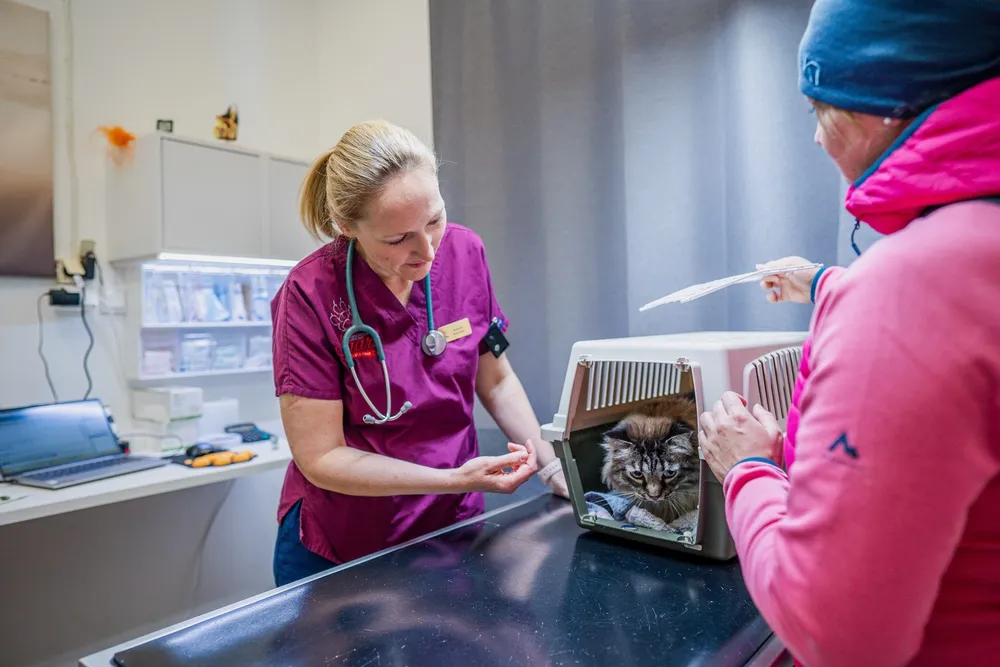
Chronic kidney disease cannot be fully prevented, but it can be caught early — and treatment started in time, ideally by stage 2, gives the best chance of slowing it down. We recommend a yearly senior check-up from about 7 years of age. Ours includes the SDMA kidney test, and a urine test can be added. Look after your cat’s teeth, feed wet food if it drinks little, and never bring lilies into a home with a cat. If your cat is drinking more or losing weight, have it checked without delay. Even without signs, the yearly check-up matters: in a large UK study, about one in three cats had no signs of illness recorded when the disease was diagnosed.
When should I bring my cat to the vet?
Book an appointment if your cat drinks or urinates more than before, has lost weight or appetite, vomits more often than usual or has bad breath. Contact us the same day if your cat suddenly goes blind, has eaten nothing for a day, is very weak or holds its head bent down. If your cat may have touched a lily or antifreeze, or a male cat strains in the litter tray but passes little or no urine, call at once. This is an emergency even before other signs appear. Blood and urine tests taken at the visit show whether the kidneys are involved; to confirm chronic kidney disease and its stage, we usually repeat them once the cat is stable. Saari Animal Clinic in Vaasa is an ISFM Cat Friendly Clinic and monitors kidney cats on an individual schedule. Call (06) 321 7300 or book online; outside our opening hours, call the on-call vet on 0600 399 299.
🐈 Cat vet in Vaasa – read more about our cat care
Sources
- International Renal Interest Society (IRIS) (2026): IRIS Staging of CKD (modified 2026). iris-kidney.com/IRIS_staging_guidelines-2026.pdf
- International Renal Interest Society (IRIS) (2026): Treatment Recommendations for CKD in Cats (2026). iris-kidney.com/IRIS_CAT_Treatment_Recommendations_-2026
- Sparkes A.H. et al. (2016): ISFM Consensus Guidelines on the Diagnosis and Management of Feline Chronic Kidney Disease. Journal of Feline Medicine and Surgery 18(3):219–239. pmc.ncbi.nlm.nih.gov/PMC11148907
- Marino C.L. et al. (2014): Prevalence and classification of chronic kidney disease in cats randomly selected from four age groups and in cats recruited for degenerative joint disease studies. Journal of Feline Medicine and Surgery 16(6):465–472. pmc.ncbi.nlm.nih.gov/PMC4414065
- Freeman L.M. et al. (2016): Evaluation of weight loss over time in cats with chronic kidney disease. Journal of Veterinary Internal Medicine 30(5):1661–1666. pmc.ncbi.nlm.nih.gov/PMC5032880
- Conroy M. et al. (2019): Chronic kidney disease in cats attending primary care practice in the UK: a VetCompass study. Veterinary Record 184(17):526. pubmed.ncbi.nlm.nih.gov/31023949
- U.S. Food and Drug Administration (FDA) (2021): Lovely Lilies and Curious Cats: A Dangerous Combination. fda.gov
- Bennett A.J., Reineke E.L. (2013): Outcome following gastrointestinal tract decontamination and intravenous fluid diuresis in cats with known lily ingestion: 25 cases (2001–2010). Journal of the American Veterinary Medical Association 242(8):1110–1116. pubmed.ncbi.nlm.nih.gov/23547675
- Obr T.D. et al. (2017): Necroulcerative hemorrhagic gastritis in a cat secondary to the administration of 3% hydrogen peroxide as an emetic agent. Journal of Veterinary Emergency and Critical Care 27(5):605–608. pubmed.ncbi.nlm.nih.gov/28795786
- Legatti S.A.M. et al. (2018): Acute kidney injury in cats and dogs: A proportional meta-analysis of case series studies. PLoS ONE 13(1):e0190772. pmc.ncbi.nlm.nih.gov/PMC5784898
- Hall J.A. et al. (2014): Comparison of serum concentrations of symmetric dimethylarginine and creatinine as kidney function biomarkers in cats with chronic kidney disease. Journal of Veterinary Internal Medicine 28(6):1676–1683. pmc.ncbi.nlm.nih.gov/PMC4895610
- Rishniw M., Bicalho R. (2015): Factors affecting urine specific gravity in apparently healthy cats presenting to first opinion practice for routine evaluation. Journal of Feline Medicine and Surgery 17(4):329–337. pmc.ncbi.nlm.nih.gov/PMC11104158
- Carney H.C. et al. (2016): 2016 AAFP Guidelines for the Management of Feline Hyperthyroidism. Journal of Feline Medicine and Surgery 18(5):400–416. pmc.ncbi.nlm.nih.gov/PMC11132203
- Williams T.L., Elliott J., Syme H.M. (2014): Effect on renal function of restoration of euthyroidism in hyperthyroid cats with iatrogenic hypothyroidism. Journal of Veterinary Internal Medicine 28(4):1251–1255. pubmed.ncbi.nlm.nih.gov/24773059
- Taylor S. et al. (2024): 2024 ISFM and AAFP consensus guidelines on the long-term use of NSAIDs in cats. Journal of Feline Medicine and Surgery 26(4):1098612X241241951. pmc.ncbi.nlm.nih.gov/PMC11103309
- Veterinary Medicines Directorate (UK) (2026): Metacam 0.5 mg/ml oral suspension for cats and guinea pigs — package leaflet. vmd.defra.gov.uk
- Acierno M.J. et al. (2018): ACVIM consensus statement: Guidelines for the identification, evaluation, and management of systemic hypertension in dogs and cats. Journal of Veterinary Internal Medicine 32(6):1803–1822. pmc.ncbi.nlm.nih.gov/PMC6271319
- European Medicines Agency (EMA): Semintra (telmisartan) oral solution for cats — EPAR, product information. ema.europa.eu/semintra
- Finnish Medicines Agency Fimea: Amodip 1,25 mg purutabletit kissalle — package leaflet. spc.fimea.fi/23406097.pdf
- Finnish Medicines Agency Fimea: Fortekor vet. 5 mg tabletit kissalle ja koiralle — package leaflet. spc.fimea.fi/23632903.pdf
- Elliott J. et al. (2000): Survival of cats with naturally occurring chronic renal failure: effect of dietary management. Journal of Small Animal Practice 41(6):235–242. pubmed.ncbi.nlm.nih.gov/10879400
- Plantinga E.A. et al. (2005): Retrospective study of the survival of cats with acquired chronic renal insufficiency offered different commercial diets. Veterinary Record 157(7):185–187. pubmed.ncbi.nlm.nih.gov/16100367
- Ross S.J. et al. (2006): Clinical evaluation of dietary modification for treatment of spontaneous chronic kidney disease in cats. Journal of the American Veterinary Medical Association 229(6):949–957. pubmed.ncbi.nlm.nih.gov/16978113
- European Medicines Agency (EMA): Mirataz (mirtazapine) transdermal ointment for cats — EPAR, product information. ema.europa.eu/mirataz
- Boyd L.M. et al. (2008): Survival in cats with naturally occurring chronic kidney disease (2000–2002). Journal of Veterinary Internal Medicine 22(5):1111–1117. pubmed.ncbi.nlm.nih.gov/18691369