

Chronic kidney disease (CKD), often called kidney failure, is one of the most common diseases of older cats: it may affect 30–40% or more of cats over 10 years old, although in most of them the disease is still at an early, mild stage. In dogs, it is much less common and is found mainly in older animals — in a large UK study, nearly two thirds of affected dogs were over 12 years old at diagnosis. The kidneys lose function slowly and irreversibly, and the first signs are easy to miss. But kidney failure is not an immediate death sentence — with early diagnosis and the right diet and treatment, many cats live for years, and dogs for many months to years, with a good quality of life. This article explains how to recognise the symptoms, what the IRIS stages mean, how we treat kidney patients at Saari Animal Clinic, what to feed, and what to expect.
What are the symptoms of kidney failure in dogs and cats?
The earliest signs are subtle: the pet drinks and urinates more (the litter box gets wet faster, or the dog asks to go out more often), its appetite drops a little and its weight creeps down. As the disease progresses, the signs become clearer: vomiting, diarrhoea or constipation, a dull and unkempt coat, muscle wasting, lethargy, bad breath with an ammonia-like smell, mouth ulcers, and pale gums from anaemia. Cats often just become quieter, hide more and stop grooming. High blood pressure caused by kidney disease can also damage the eyes, and an older pet that suddenly goes blind needs to see a vet the same day. Because the changes come on over months, they are easy to miss — and creatinine, the traditional kidney value in a blood test, usually stays within normal limits until roughly three quarters of kidney function has been lost. That is why we recommend a yearly blood and urine test for dogs and cats from the age of 7. In a US study of 569 cats, weight loss was, on average, already under way three years before diagnosis. In a large UK study, about one in three cats had no signs of illness recorded when kidney disease was diagnosed.
What causes kidney failure in dogs and cats?
Chronic kidney disease is usually a slow wearing-out of the kidney tissue with age, and often no single cause is found. Known contributors are high blood pressure, kidney infections and stones, an earlier episode of acute kidney injury, and hereditary conditions such as polycystic kidney disease in Persian and related cat breeds; some dog breeds are also more at risk. Dental disease is linked with kidney disease in both species, although it has not been proven to cause it. Acute kidney failure (acute kidney injury) is different: it strikes suddenly, at any age, after poisoning, an infection or another severe illness. Causes include antifreeze (ethylene glycol), grapes and raisins in dogs, lilies in cats, human anti-inflammatory painkillers such as ibuprofen, leptospirosis, and severe infections such as pyometra (womb infection). Acute failure is an emergency: with prompt treatment the kidneys can often recover, but not always — in studies of dogs and cats hospitalised with acute kidney injury, around half did not survive, and survivors can be left with lasting kidney damage. Chronic failure, by contrast, cannot be reversed, only slowed.
How is kidney disease diagnosed?
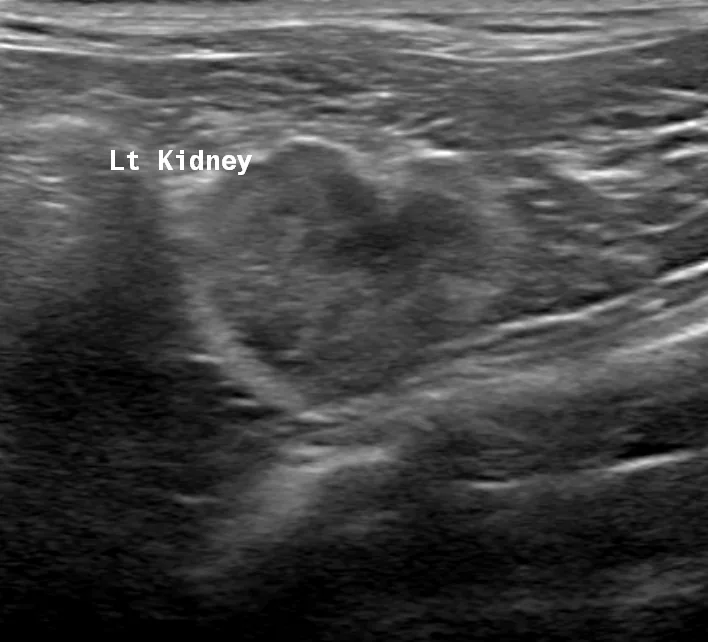
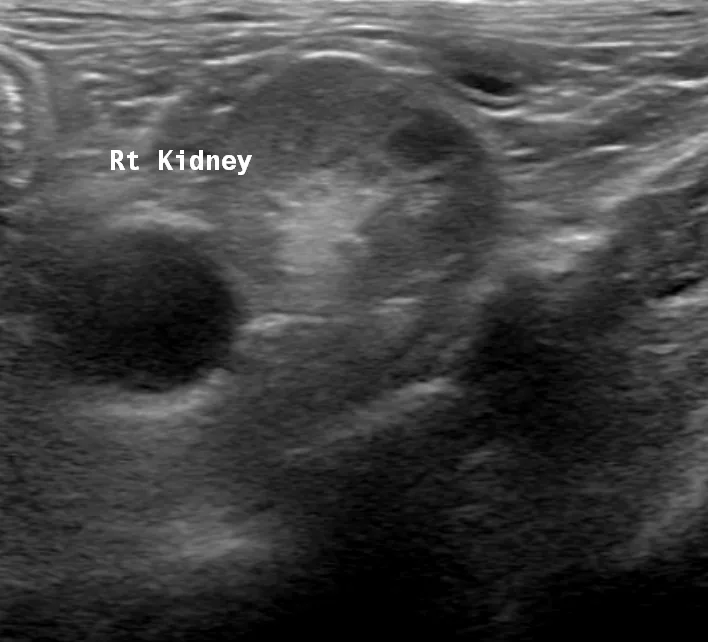
Diagnosis is based on blood and urine tests. The blood test measures creatinine, urea (BUN), phosphorus, potassium and red blood cells, and at our clinic also SDMA — a kidney marker that usually rises earlier than creatinine. In two small studies of research cats and dogs, SDMA rose, on average, about 17 months before creatinine in cats and about 10 months before it in dogs. The urine test shows whether the kidneys can still concentrate urine (specific gravity), whether protein is leaking into the urine (UPC ratio) and whether there are signs of infection. We also measure blood pressure, because high blood pressure is both a result of kidney disease and a threat to the kidneys, eyes, heart and brain. An abdominal ultrasound shows the size and structure of the kidneys and checks for stones, obstruction or tumours. A single raised value is not a diagnosis, because creatinine and SDMA can occasionally rise for other reasons. The disease is confirmed and staged from tests taken on at least two occasions in a stable, well-hydrated patient. This is why we often repeat the blood test after a few weeks before assigning the IRIS stage, which guides treatment.
What are the IRIS stages of kidney disease?
The International Renal Interest Society (IRIS) classifies chronic kidney disease into four stages based on blood creatinine and SDMA. Stage 1: creatinine normal and SDMA at most slightly raised, but with signs of kidney disease — for example, SDMA that stays slightly raised on repeat tests, dilute urine with no other cause (in cats), protein in the urine, abnormal kidneys on ultrasound, or values rising over time. Stage 2: mild disease; creatinine normal or slightly raised, symptoms usually mild or absent. Stage 3: moderate disease; symptoms such as poor appetite, vomiting and weight loss are common but not always present. Stage 4: severe disease with a high risk of uraemic crises — nausea, mouth ulcers, weakness. Stage 2 starts at a creatinine of 125 µmol/l in dogs and 140 µmol/l in cats, stage 3 at 251 µmol/l and stage 4 above 440 µmol/l. If SDMA stays higher than the creatinine value would suggest, the pet is staged and treated one stage higher. Sub-stages for blood pressure and urine protein complete the picture, guiding treatment and how often we re-check.
How is kidney failure treated?
Kidney disease cannot be cured, but its progression can often be slowed considerably. The cornerstones are a renal diet with restricted phosphorus and moderate amounts of high-quality protein (shown in clinical studies to extend survival), phosphate binders when phosphorus stays high despite the diet, and constant access to fresh water. When needed, we give fluid therapy at the clinic: into a vein for pets that are dehydrated or in a uraemic crisis, or under the skin for some pets with advanced disease. Fluids are dosed carefully, because too much fluid can be harmful, especially in cats with heart disease. Other treatments are chosen according to the stage and test results: medication for high blood pressure and for protein leaking into the urine (see below), anti-nausea drugs and appetite stimulants, and potassium supplements if blood potassium is low (more often needed in cats). When anaemia becomes significant, injections that stimulate red blood cell production, such as darbepoetin (a human medicine), can help. Medicines that can harm the kidneys are avoided or stopped where possible. The urine is checked for infection: an infection that reaches the kidneys can quickly worsen kidney function and is treated promptly. Bacteria found in the urine of a pet with no signs of infection do not always need antibiotics — the vet decides case by case. Dental disease is kept under control. At Saari, we build an individual plan for each kidney patient and adjust it at every check-up.
How are high blood pressure and protein in the urine treated?
High blood pressure is common in kidney patients and can damage the eyes, heart and brain, and the kidneys themselves. Treatment is usually started when the systolic blood pressure stays at 160 mmHg or above on repeated measurements, or straight away if the eyes or other organs are already affected. Cats are usually given amlodipine or telmisartan (amlodipine if the pressure is very high or if the eyes or brain are affected); dogs are usually given an ACE inhibitor such as benazepril, with amlodipine added if needed. If the urine protein:creatinine ratio stays above 0.5 in a dog or 0.4 in a cat, the cause is investigated. A drug that blocks the renin–angiotensin system is then given together with the renal diet: telmisartan or benazepril in cats, and telmisartan as the first choice in dogs. In cats, these medicines are licensed for the uses described here. In dogs, they are not, so the vet prescribes them off-label, as EU veterinary law allows when no medicine is licensed for that use. Unless the eyes or brain are in immediate danger, dehydration is corrected before these medicines are started, because in a dehydrated animal they can make kidney function drop sharply. Blood pressure, urine protein and kidney values are re-checked after each change of dose.
What should a dog or cat with kidney failure eat?
A therapeutic renal diet is the treatment with the best evidence behind it. In two non-randomised studies, cats that ate a renal diet lived more than twice as long as cats that did not (a median of 633 versus 264 days in one of them). In a randomised trial in cats, none of the cats on the renal diet had a uraemic crisis, compared with about a quarter of those on ordinary food. In a randomised trial in dogs with mild to moderate kidney failure, a renal diet reduced uraemic crises and deaths, and slowed the decline in kidney function. Renal diets are low in phosphorus and contain moderate amounts of high-quality protein. They have added omega-3 fatty acids, potassium and B vitamins, and help counter the acid build-up that kidney disease can cause. Wet food is preferable because it also provides water — many kidney patients are in a state of mild, chronic dehydration. Start the renal diet early — ideally in stage 2, while appetite is still good — but never while the pet is ill, nauseous or hospitalised. This is because a pet can link a food eaten during nausea with feeling sick, and refuse it afterwards. For the same reason, give tablets in a separate treat rather than hiding them in the renal food (phosphate binders are the exception: they are mixed into each meal as instructed). Switch foods gradually over several weeks (often 4–8 weeks in cats), mixing the old food with the new. Never force a renal diet on a pet that refuses it: eating something is more important than eating the perfect food, and we have several flavours and textures, both wet and dry, to try. Home-cooked renal diets are possible but must be formulated by a veterinary nutritionist — an unbalanced home diet can do more harm than good. Ask us about renal foods; we also sell them at the clinic.
How long can a dog or cat live with kidney failure?
It depends mostly on the stage at diagnosis and on how well phosphorus, blood pressure, urine protein and appetite are managed. In a well-known study of 211 cats, those diagnosed at the upper end of stage 2 (creatinine above about 200 µmol/l) lived a median of about 3 years, those in stage 3 about 2 years, and those in stage 4 about 3 months. Cats diagnosed earlier in stage 2 may do even better. In published studies, dogs have generally lived for a shorter time after diagnosis than cats. In two smaller studies (27 and 116 dogs), median survival was about 15 months in stage 2, 6–11 months in stage 3, and between 2 weeks and 2 months in stage 4. Both studies used older IRIS limits, under which stage 3 in dogs began at about 180 µmol/l instead of today’s 251. All these figures are medians from studies of animals under veterinary care: half of the animals lived longer. They are not predictions for your pet — with a well-accepted renal diet, a good appetite and regular monitoring, many individual animals outlive them.
What does end-stage kidney failure look like?
In the final stage, the kidneys can no longer clear waste from the blood, and the pet becomes uraemic. It stops eating (and often drinking), vomits, loses weight rapidly, is weak and sleeps most of the day. It may also have mouth ulcers, strong-smelling breath and, occasionally, tremors. Fluids, anti-nausea drugs and appetite stimulants can bring back good days for a while. We help you judge quality of life honestly: is the pet still eating, moving, interacting and free of pain most days? When the answer becomes no, euthanasia is the last kindness we can offer, and we talk about it with you openly and in good time.
How often should a kidney patient be checked?
After diagnosis, we usually re-check within 2–4 weeks to see how the diet and treatment are working. From then on, we re-check every 3–6 months in stable stage 2 patients, every 2–3 months in stage 3, and every 1–2 months in stage 4. A pet on blood-pressure medication should be checked at least every 3 months, even when stable. Each check includes weight, blood pressure, a blood test (creatinine, SDMA, phosphorus, potassium, red blood cells) and a urine test. Regular monitoring is what lets us adjust treatment before a small problem becomes a crisis.
Can kidney disease be prevented or caught early?
Chronic kidney disease cannot be fully prevented, but it can be caught early — and treatment started early, ideally by stage 2, gives the best chance of slowing it down. We recommend a yearly senior check-up with blood and urine tests for dogs and cats from the age of 7; ours includes an SDMA kidney test. We also recommend looking after your pet’s teeth (dental disease is linked with kidney disease), feeding wet food to cats that drink little, and keeping antifreeze, human painkillers, grapes, raisins and lilies out of reach. If your cat is drinking more or losing weight, have it checked without delay — these are common early signs. Even without signs, the yearly check-up matters: in a large UK study, about one in three cats had no signs of illness recorded when the disease was diagnosed.
When should I bring my pet to the vet?
If your dog or cat drinks and urinates more than before, has lost weight or appetite, vomits repeatedly or has bad breath, book an appointment. A pet that suddenly goes blind needs to see a vet the same day. Blood and urine tests taken at the visit show whether the kidneys are involved; to confirm chronic kidney disease and determine its stage, we usually repeat them once the pet is stable. Saari Animal Clinic in Vaasa monitors kidney patients on an individual schedule. Call (06) 321 7300 or book online.
Sources
- International Renal Interest Society (IRIS) (2026): IRIS Staging of CKD (modified 2026) and Treatment Recommendations for CKD in Dogs and in Cats (2026). iris-kidney.com
- Sparkes A.H. ym. (2016): ISFM Consensus Guidelines on the Diagnosis and Management of Feline Chronic Kidney Disease. Journal of Feline Medicine and Surgery 18(3):219–239. pmc.ncbi.nlm.nih.gov/PMC11148907
- Acierno M.J. ym. (2018): ACVIM consensus statement: Guidelines for the identification, evaluation, and management of systemic hypertension in dogs and cats. Journal of Veterinary Internal Medicine 32(6):1803–1822. pmc.ncbi.nlm.nih.gov/PMC6271319
- Marino C.L. ym. (2014): Prevalence and classification of chronic kidney disease in cats randomly selected from four age groups and in cats recruited for degenerative joint disease studies. Journal of Feline Medicine and Surgery 16(6):465–472. pmc.ncbi.nlm.nih.gov/PMC4414065
- O’Neill D.G. ym. (2013): Chronic kidney disease in dogs in UK veterinary practices: prevalence, risk factors, and survival. Journal of Veterinary Internal Medicine 27(4):814–821. pubmed.ncbi.nlm.nih.gov/23647231
- Freeman L.M. ym. (2016): Evaluation of weight loss over time in cats with chronic kidney disease. Journal of Veterinary Internal Medicine 30(5):1661–1666. pmc.ncbi.nlm.nih.gov/PMC5032880
- Conroy M. ym. (2019): Chronic kidney disease in cats attending primary care practice in the UK: a VetCompass study. Veterinary Record 184(17):526. pubmed.ncbi.nlm.nih.gov/31023949
- Legatti S.A.M. ym. (2018): Acute kidney injury in cats and dogs: A proportional meta-analysis of case series studies. PLoS ONE 13(1):e0190772. pmc.ncbi.nlm.nih.gov/PMC5784898
- Hall J.A. ym. (2014): Comparison of serum concentrations of symmetric dimethylarginine and creatinine as kidney function biomarkers in cats with chronic kidney disease. Journal of Veterinary Internal Medicine 28(6):1676–1683. pmc.ncbi.nlm.nih.gov/PMC4895610
- Hall J.A. ym. (2016): Serum concentrations of symmetric dimethylarginine and creatinine in dogs with naturally occurring chronic kidney disease. Journal of Veterinary Internal Medicine 30(3):794–802. pmc.ncbi.nlm.nih.gov/PMC4913574
- Elliott J. ym. (2000): Survival of cats with naturally occurring chronic renal failure: effect of dietary management. Journal of Small Animal Practice 41(6):235–242. pubmed.ncbi.nlm.nih.gov/10879400
- Plantinga E.A. ym. (2005): Retrospective study of the survival of cats with acquired chronic renal insufficiency offered different commercial diets. Veterinary Record 157(7):185–187. pubmed.ncbi.nlm.nih.gov/16100367
- Ross S.J. ym. (2006): Clinical evaluation of dietary modification for treatment of spontaneous chronic kidney disease in cats. Journal of the American Veterinary Medical Association 229(6):949–957. pubmed.ncbi.nlm.nih.gov/16978113
- Jacob F. ym. (2002): Clinical evaluation of dietary modification for treatment of spontaneous chronic renal failure in dogs. Journal of the American Veterinary Medical Association 220(8):1163–1170. pubmed.ncbi.nlm.nih.gov/11990962
- Boyd L.M. ym. (2008): Survival in cats with naturally occurring chronic kidney disease (2000–2002). Journal of Veterinary Internal Medicine 22(5):1111–1117. pubmed.ncbi.nlm.nih.gov/18691369
- Rudinsky A.J. ym. (2018): Factors associated with survival in dogs with chronic kidney disease. Journal of Veterinary Internal Medicine 32(6):1977–1982. pmc.ncbi.nlm.nih.gov/PMC6271312
- Pedrinelli V. ym. (2020): Nutritional and laboratory parameters affect the survival of dogs with chronic kidney disease. PLoS ONE 15(6):e0234712. pmc.ncbi.nlm.nih.gov/PMC7326232
- Finnish Medicines Agency Fimea (2025): Amodip 1,25 mg purutabletit kissalle — package leaflet (indication: systemic hypertension in cats). spc.fimea.fi/23406097.pdf
- Finnish Medicines Agency Fimea (2024): Fortekor vet. 5 mg tabletit kissalle ja koiralle — package leaflet (dogs: congestive heart failure; cats: proteinuria associated with chronic kidney disease). spc.fimea.fi/23632903.pdf
- European Medicines Agency (EMA) (2018): Committee for Medicinal Products for Veterinary Use (CVMP) meeting of 13–15 March 2018 — Semintra (telmisartan): new 10 mg/ml strength and new indication, systemic hypertension in cats. ema.europa.eu
- European Union (2019): Regulation (EU) 2019/6 on veterinary medicinal products, Article 112 (use outside the terms of the marketing authorisation in non-food-producing species). Official Journal of the European Union L 4:43–167. eur-lex.europa.eu