

An ear infection in dogs — inflammation of the outer ear canal, or otitis externa — is one of the most common reasons for a vet visit. The dog shakes its head and scratches its ears, and the ear smells bad or discharges. Do not wait for it to heal on its own: with proper examination and treatment, most acute ear infections clear within 2–4 weeks. A recurring infection almost always has an underlying cause, which needs to be found and kept under control. This article explains how to recognise an ear infection, what happens at the vet, what treatment costs at Saari Animal Clinic, and how to prevent it from coming back.
What are the symptoms of an ear infection in dogs?
The most typical signs are head shaking, scratching the ears and rubbing them on the floor or furniture, a bad smell from the ear, yellowish, brown or dark discharge, redness of the ear canal and ear flap, and tenderness — the dog may yelp or pull its head away when the ear is touched. If the dog tilts its head or walks unsteadily, its eyes flicker from side to side, or one side of its face droops (lip, ear or eyelid), the inflammation may have spread to the middle or inner ear — see a vet the same day.
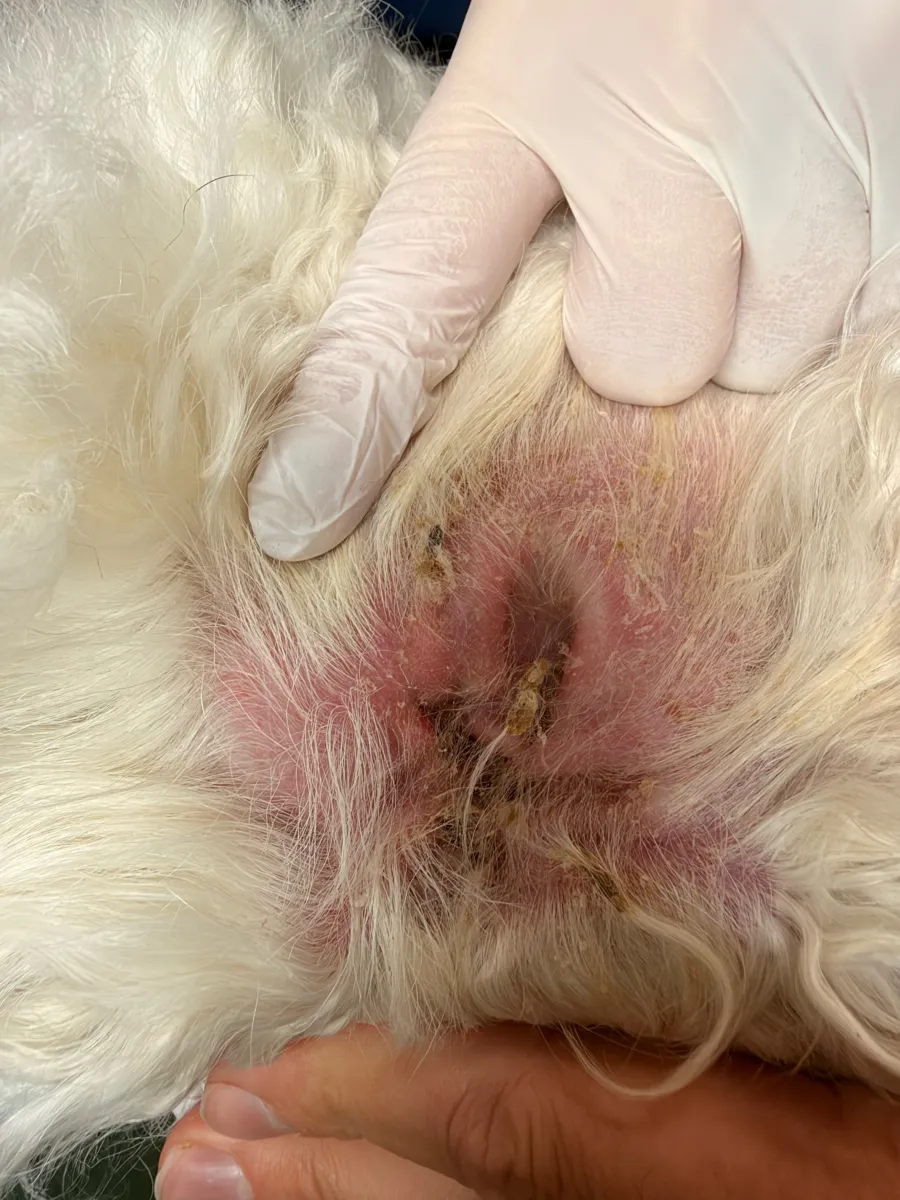
Why do dogs get ear infections?
The infection itself is almost always secondary: something else first inflames the ear canal, and yeast (Malassezia) and bacteria then thrive in the warm, moist, inflamed canal and keep the inflammation going. The most common underlying cause is allergy — environmental allergy (atopic dermatitis) or food allergy. In one study of 100 dogs with ear inflammation, allergic skin disease was the underlying cause in 43 of them. Other causes are ear mites, a foreign body such as a grass awn, skin scaling and oil-gland disorders (seborrhoea), autoimmune diseases, hormonal diseases such as hypothyroidism and, in older dogs, growths in the ear canal. Predisposing factors are floppy ears, narrow or hairy ear canals and moisture from swimming and bathing. Breed matters too: in a large UK study, Basset Hounds, Shar Peis, Golden Retrievers, French Bulldogs, Cocker Spaniels and Poodle crosses, among others, were at higher risk.
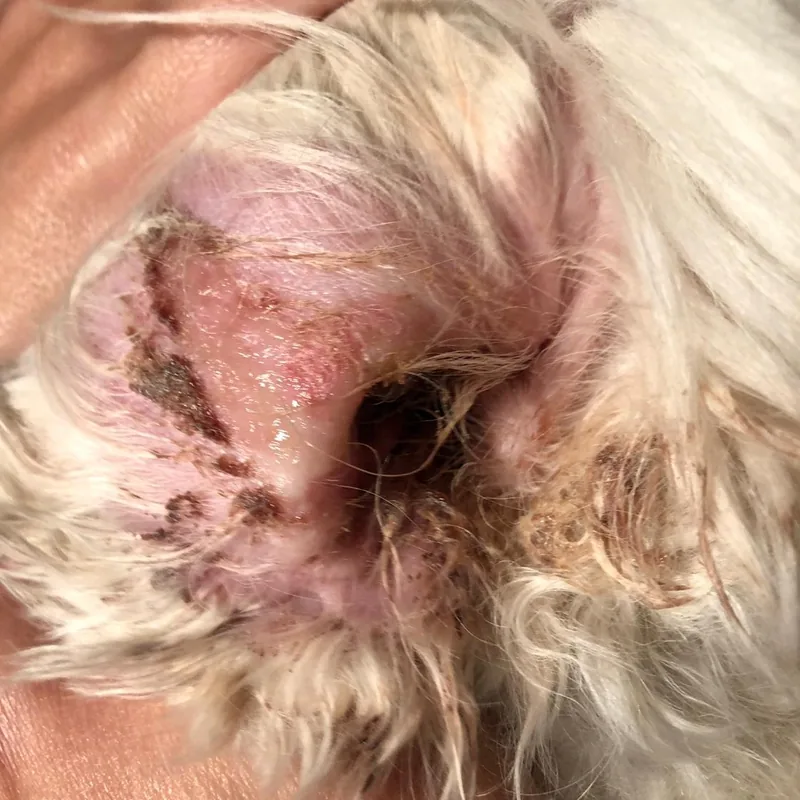
Does a dog ear infection heal on its own?
Do not count on it. An untreated or incompletely treated ear infection tends to become chronic: the skin of the ear canal thickens and scars, the infection can spread to the middle ear, and at worst the canal narrows so much that only surgery can help. Do not start ear drops at home on your own either — not even drops left over from an earlier infection. The wrong medicine does not work (an antibiotic, for example, does nothing against yeast), and some ear drops and cleaners can damage hearing and balance if the eardrum is ruptured, and only a vet can check whether it is. In Finland, veterinary ear medicines are prescription-only, and human ear drops are not meant for dogs. Ear cleaners are part of treatment, but on their own they do not cure an infection. If your dog is shaking its head or its ear smells, book an appointment — the earlier the infection is treated, the faster it usually heals.
How is an ear infection examined and treated at the vet?
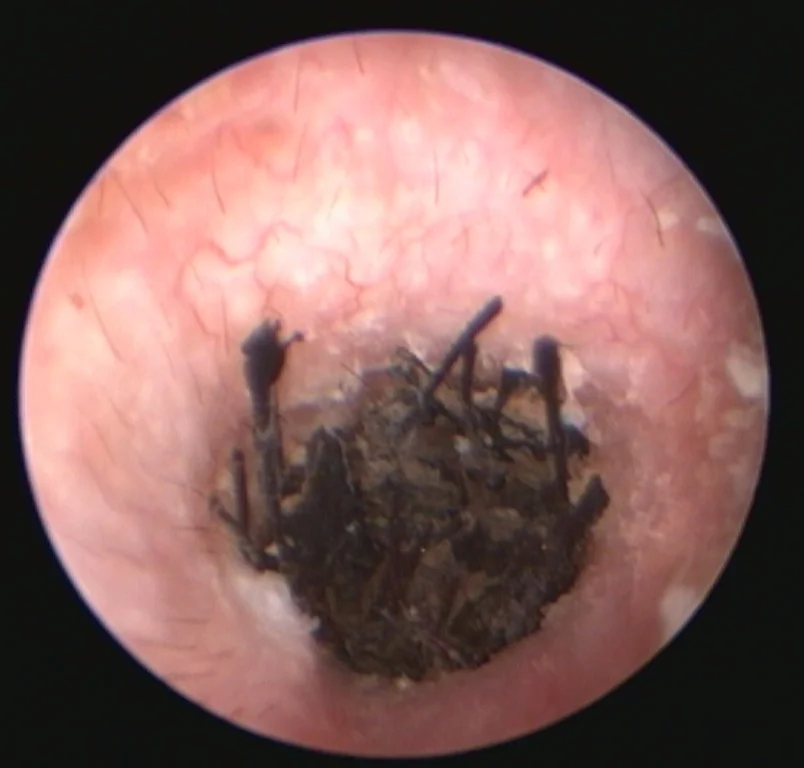
At the appointment the ear canal and eardrum are examined with an otoscope. A sample of the ear discharge is checked under the microscope right away in our clinic’s own lab: it shows whether there is yeast, bacteria, ear mites or a combination, so treatment is based on the finding, not on guesswork. The ear is cleaned and ear drops are prescribed, with antifungal, antibiotic and anti-inflammatory steroid components as needed; not every ear needs an antibiotic. If the infection keeps coming back or rod-shaped bacteria are seen, a bacterial culture and antibiotic sensitivity test may be needed. The first re-check is usually after 1–2 weeks, with the otoscope and a new sample. Treatment continues until the ear is clear — the disappearance of symptoms does not yet mean the ear is healthy. If the ear is very painful, the examination and cleaning can be done under sedation.
When are video-otoscopy and an ear flush needed?
If the infection is chronic or keeps returning despite treatment, the ear canal is blocked with discharge, or the eardrum cannot be seen, a more thorough examination is needed. At Saari Animal Clinic this is done with a video-otoscope under general anaesthesia: a thin camera shows a magnified image of the whole ear canal and eardrum on a monitor, the canal is flushed clean of discharge and bacterial biofilm, and samples can be taken and foreign bodies removed at the same time. Ear medication works only when it reaches the skin of the ear canal, so a clean canal is essential. Read more in our article Video-Otoscopy — Ear Endoscopy.
How much does treating a dog ear infection cost?
An ear-infection visit at Saari Animal Clinic: ear examination including sampling and microscopy €99.79 + visit fee €38, i.e. €137.79 in total. Ear drops and any other medicines sent home are extra. A re-check including a new sample and microscopy costs €77.88 + visit fee €38, i.e. €115.88 in total. A video-otoscopic ear flush under general anaesthesia costs €449–489. You will find our other prices in the price list. Direct insurance billing is available for LähiTapiola, Agria and Pohjola customers. An ear infection treated early is usually much cheaper than a chronic one.
Why does a dog’s ear infection keep coming back?
When an ear infection keeps returning, ear drops only treat the consequence. The underlying cause is most often allergy, in which case the next step is an allergy work-up. Food allergy can only be diagnosed or ruled out with a strict elimination diet lasting at least 8 weeks, followed by a return to the old food to see whether the signs come back — blood tests are not reliable for this. Environmental allergy (atopic dermatitis) is diagnosed from the dog’s history and signs once other causes have been ruled out; allergy blood tests then help choose the allergens for immunotherapy (desensitisation). Allergy is usually lifelong but can be kept under control, often together with regular maintenance care of the ears. Other reasons for recurrence are hormonal diseases, structural changes in the ear canal and treatment that was stopped too early. We describe the work-up of recurrent infections on our Skin diseases, allergies and ear infections page.
What happens when an ear infection becomes chronic?
Repeated rounds of inflammation and infection change the ear canal: its skin thickens, the canal narrows, and bacteria that resist many antibiotics, such as Pseudomonas, become more common. In long-standing ear inflammation the middle ear is often infected too, even when the eardrum looks intact. Chronic cases therefore often need a bacterial culture, a thorough flush of the canal under general anaesthesia and a long, closely monitored course of treatment. Most ear-canal surgery can be avoided if recurring infections are managed properly at an early stage. If the canal has become permanently narrowed and hardened (end-stage ear disease), however, the remaining option is surgery that removes the ear canal (total ear canal ablation).
How do I care for my dog’s ears at home?
A healthy ear does not need regular cleaning — over-cleaning irritates it. After swimming or bathing, dry the ears and, if needed, clean them with an ear cleaner recommended by your vet: fill the canal, massage the base of the ear, and let the dog shake out the excess. Never insert a cotton bud into the ear canal — it pushes debris deeper and can damage the eardrum. Do not pluck ear-canal hair routinely: in a healthy ear, plucking can trigger inflammation, so ask your vet first. Dogs with recurring ear problems often need maintenance cleaning and anti-inflammatory ear drops on a schedule agreed with your vet. Check the ears weekly: a bad smell, redness or discharge is a sign that your vet should take a look.
What about ear infections in cats?
In cats, ear inflammation is less common than in dogs, and the most frequent cause is ear mites (Otodectes cynotis), especially in kittens and young cats. The typical signs are dark, coffee-ground-like debris and intense itching. Ear mites are treated effectively with an antiparasitic, given to all cats and dogs in the household at the same time. A recurring or one-sided ear problem in a cat may be due to allergy or an inflammatory polyp — a benign growth from the middle ear, most common in young cats but possible at any age. In an older cat a tumour of the ear canal must also be ruled out, so a cat’s ear, like a dog’s, should always be examined.
When does a dog ear infection need a vet?
Whenever the dog shakes its head or scratches its ears repeatedly, or the ear smells, discharges or is red and tender. Urgently, the same day, if the dog tilts its head or walks unsteadily, one side of its face droops, or it is clearly in pain. At Saari Animal Clinic in Vaasa we examine the ears with an otoscope and microscope at the same visit, and for chronic cases we have video-otoscopy and ear flushing. Book an appointment by calling (06) 321 7300 or via online booking.
Sources
- Hoff S. (2025): Otitis Externa in Animals. Merck Veterinary Manual. merckvetmanual.com
- Hoff S. (2025): Otitis Media and Interna in Animals. Merck Veterinary Manual. merckvetmanual.com
- Nuttall T. (2023): Managing recurrent otitis externa in dogs: what have we learned and what can we do better? Journal of the American Veterinary Medical Association 261(S1):S10–S22. pubmed.ncbi.nlm.nih.gov
- Saridomichelakis M.N. ym. (2007): Aetiology of canine otitis externa: a retrospective study of 100 cases. Veterinary Dermatology 18(5):341–347. pubmed.ncbi.nlm.nih.gov
- O’Neill D.G. ym. (2021): Frequency and predisposing factors for canine otitis externa in the UK – a primary veterinary care epidemiological view. Canine Medicine and Genetics 8:7. pmc.ncbi.nlm.nih.gov
- Ruokavirasto: Ulkokorvan tulehdus, koira – mikrobilääkkeiden käyttösuositukset. ruokavirasto.fi
- Secker B. ym. (2023): Pseudomonas spp. in Canine Otitis Externa. Microorganisms 11(11):2650. pmc.ncbi.nlm.nih.gov
- Olivry T. ym. (2015): Critically appraised topic on adverse food reactions of companion animals (1): duration of elimination diets. BMC Veterinary Research 11:225. pmc.ncbi.nlm.nih.gov
- Mueller R.S., Olivry T. (2017): Critically appraised topic on adverse food reactions of companion animals (4): can we diagnose adverse food reactions in dogs and cats with in vivo or in vitro tests? BMC Veterinary Research 13:275. pmc.ncbi.nlm.nih.gov
- Companion Animal Parasite Council (2019): Otodectic Mite. capcvet.org