
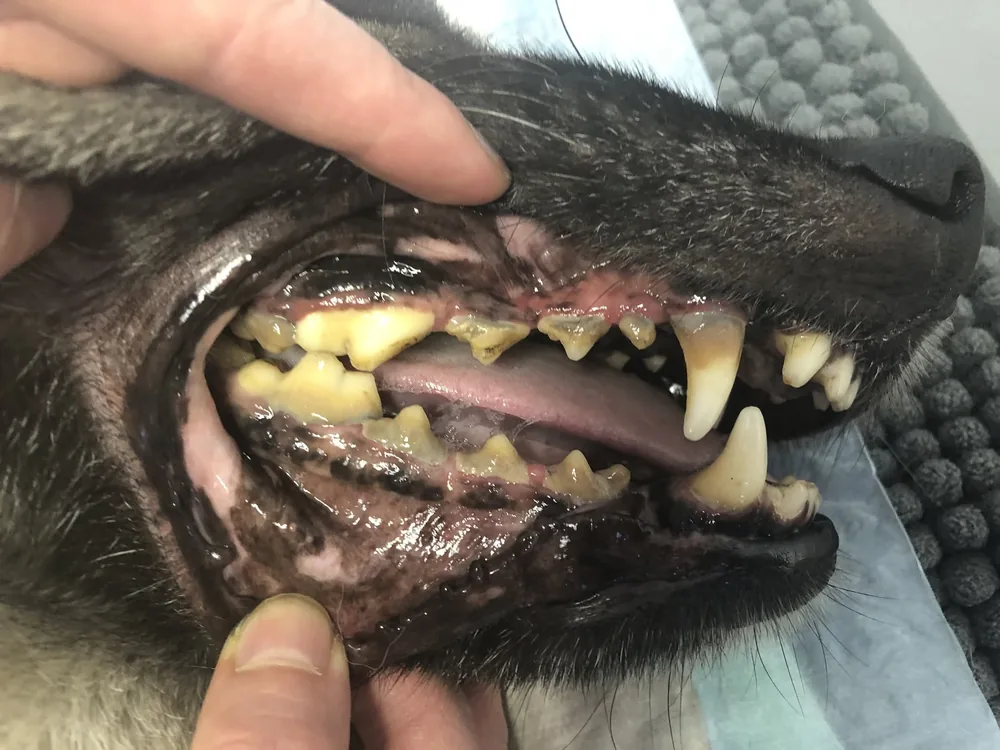
Periodontal disease is one of the most common diseases in dogs and cats: UK veterinary practices diagnose it in about 12.5% of dogs and 15% of cats in a given year, and detailed examinations under anesthesia find it in 44–100% of dogs. Left untreated, it can destroy the tissues that hold the teeth, causing bone loss and eventually tooth loss. PerioVive is a hyaluronic acid gel used as an add-on during dental procedures — not a stand-alone treatment.
What is PerioVive?
PerioVive is a gel containing 0.8% hyaluronic acid (HA), made for veterinary dental procedures. HA occurs naturally in the gums and in the tissues that anchor the teeth, and it takes part in inflammation and wound healing. At the end of the procedure, the gel is placed into cleaned pockets, extraction sockets or surgical sites. PerioVive is sold as a veterinary medical device, not as an authorized medicine, so no medicines authority has assessed its efficacy.
How Does It Work?
Laboratory and animal studies suggest that hyaluronic acid can dampen inflammation, help stabilize the blood clot in a wound, slow the growth of some bacteria and support the cells that rebuild gum, bone and the tooth’s attachment. Whether these effects improve healing in pets with naturally occurring periodontal disease is not yet known.
Scientific Evidence
The best evidence comes from studies in humans. In a meta-analysis of 13 randomized trials (Eliezer et al. 2019), adding HA reduced pocket depth by about 0.4 mm more after non-surgical treatment and 0.9 mm more after surgery (two trials), but results varied widely and the risk of bias was high. A 2026 meta-analysis (Rotundo et al.) also found small gains after non-surgical treatment, but they were not confirmed in trials at low risk of bias. Small studies in laboratory dogs with experimentally created defects have generally found better healing with HA on microscopic examination. In one (Tella et al. 2023; four dogs, assessed at three months), new bone filled about 89% of the defect height when HA gel was added to surgical root cleaning, versus 39% with cleaning alone. In another (Shirakata et al. 2022; six dogs), HA produced more new tissue anchoring the root, but not significantly more bone. None used PerioVive; Tella et al. used a different 0.8% HA gel. No side effects were reported in these dog studies.
What Are the Limitations?
To our knowledge, no controlled study has been published on HA gels in pet dogs or cats with naturally occurring periodontal disease, or on PerioVive itself; data from cats are especially scarce. HA gel is an add-on, never a replacement for the basics: cleaning above and below the gumline under anesthesia, full-mouth dental X-rays, extraction of teeth that cannot be saved and daily tooth brushing. Without home care, plaque returns within a day and cleaned pockets can be reinfected within two weeks.
When is PerioVive Used?
PerioVive can be used in cleaned pockets around teeth worth keeping, in extraction sockets and in gum surgery. It is applied once, under the same anesthesia as the dental procedure, so no extra visit is needed. It has not been shown to save a loose tooth or one that has lost most of its supporting bone — such teeth usually need to be extracted.
PerioVive Treatment at Our Clinic
At Eläinklinikka Saari we use PerioVive in dogs and cats as an add-on during dental procedures under general anesthesia — usually with full-mouth dental X-rays and scaling, and in surgery such as removing a dental cyst. The gel is charged by the amount used; a typical treatment needs only a fraction of a milliliter. Ask us at your pet’s next visit or call (06) 321 7300 — we will assess whether your pet might benefit.
Sources
- O’Neill D.G. ym. (2021): Epidemiology of periodontal disease in dogs in the UK primary-care veterinary setting. Journal of Small Animal Practice 62(12):1051–1061. pmc.ncbi.nlm.nih.gov/PMC9291557
- O’Neill D.G. ym. (2023): Periodontal disease in cats under primary veterinary care in the UK: frequency and risk factors. Journal of Feline Medicine and Surgery 25(3):1098612X231158154. pmc.ncbi.nlm.nih.gov/PMC10812011
- Wallis C., Holcombe L.J. (2020): A review of the frequency and impact of periodontal disease in dogs. Journal of Small Animal Practice 61(9):529–540. pubmed.ncbi.nlm.nih.gov/32955734
- Eliezer M. ym. (2019): Hyaluronic acid as adjunctive to non-surgical and surgical periodontal therapy: a systematic review and meta-analysis. Clinical Oral Investigations 23(9):3423–3435. pubmed.ncbi.nlm.nih.gov/31338632
- Rotundo R. ym. (2026): Efficacy of adjunctive use of hyaluronic acid in surgical and nonsurgical periodontal treatment. A systematic review and meta-analysis. Periodontology 2000 (published online ahead of print, doi:10.1111/prd.70044). pubmed.ncbi.nlm.nih.gov/41992778
- Tella E.A. ym. (2023): Evaluation of hyaluronic acid gel with or without acellular dermal matrix allograft in the treatment of class II furcation defects in dogs: a histologic and histomorphometric study. Saudi Dental Journal 35(7):845–853. pmc.ncbi.nlm.nih.gov/PMC10658385
- Shirakata Y. ym. (2022): Cross-linked hyaluronic acid gel with or without a collagen matrix in the treatment of class III furcation defects: a histologic and histomorphometric study in dogs. Journal of Clinical Periodontology 49(10):1079–1089. pmc.ncbi.nlm.nih.gov/PMC9796036
- Niemiec B. ym. (2020): World Small Animal Veterinary Association Global Dental Guidelines. Journal of Small Animal Practice 61(7):E36–E161. wsava.org
- PerioVive (2025): PerioVive — hyaluronic acid for veterinary dental applications. Manufacturer’s product fact sheet (veterinary medical device; product facts only). cdn.shopify.com