

Dog teeth cleaning at Saari Animal Clinic in Vaasa costs €303 (under 20 kg) or €353 (over 20 kg); for cats €263. The price includes general anaesthesia, ultrasonic scaling, an oral examination and a dental chart. Dental X-rays (€59–99) are taken at the same time, and you get a cost estimate for any extractions before the procedure.
Why is dental care important?
Dental disease is among the most common health problems in pets. By the age of three, the majority of dogs and cats have tartar and gingivitis. Untreated dental damage progresses silently — animals instinctively hide pain, so owners often notice the problem only when it has advanced significantly. Regular teeth cleaning and dental care extend your pet's lifespan and significantly improve quality of life.
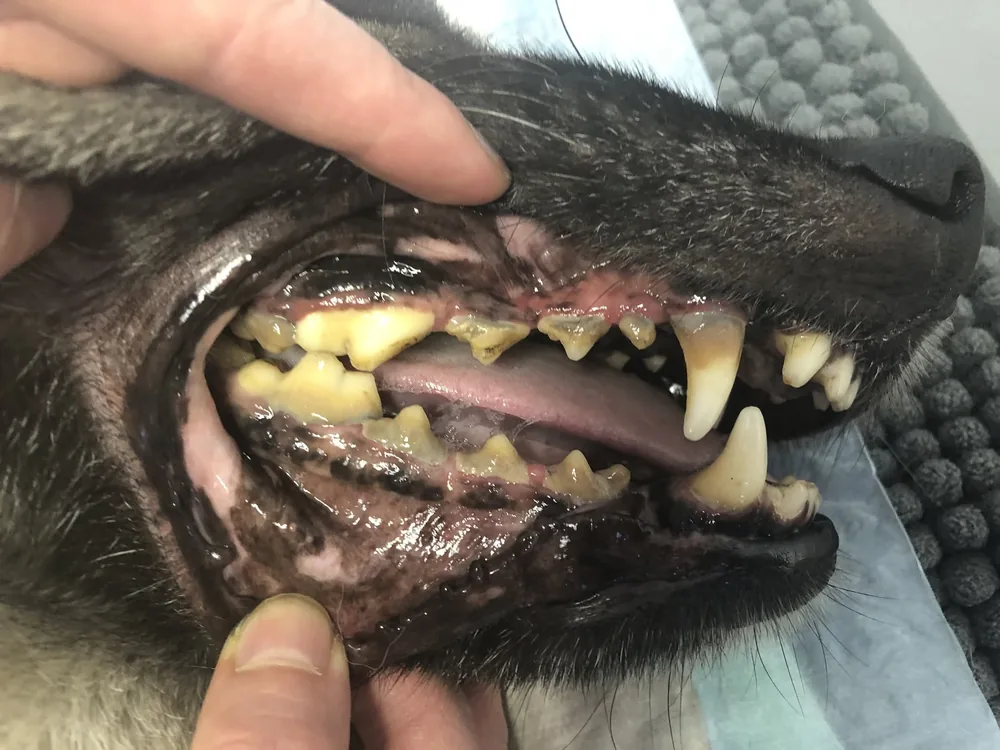
Dental care prices
The teeth-cleaning price includes general anaesthesia, ultrasonic scaling, an oral examination and a dental chart. Permanent tooth extractions have no fixed price: it is set after the clinical examination and X-rays and depends on the number of teeth, the number and condition of the roots and the time required. You receive an estimate before the procedure. All prices are in our price list. Direct insurance billing is available for LähiTapiola, Agria and Pohjola customers.
Teeth cleaning — how is it done?
Tartar is removed with an ultrasonic scaler from the tooth surfaces and from below the gum line, where tartar and bacteria cause gingivitis and periodontitis. The procedure is always done under general anaesthesia: on an awake animal only the visible part of the teeth can be cleaned, the area below the gum line cannot be reached, and the mouth cannot be properly examined or X-rayed. "Anaesthesia-free teeth cleaning" is cosmetic and does not treat the disease itself — which is why we do not offer it. Teeth cleaning with X-rays usually takes about 1–2 hours; any extractions extend the procedure.
Tooth extractions
A tooth is extracted when it can no longer be saved: in advanced periodontitis, tooth resorption, root infection, or when the tooth is fractured into the pulp. Extractions are done surgically — multi-rooted teeth are sectioned and the roots removed completely. The wound is closed with dissolvable sutures and pain medication is sent home. Extractions are priced case by case based on the clinical examination and X-rays. Deciduous teeth are often removed during spay or neuter surgery under the same anaesthesia.
Dental X-rays — seeing what is hidden
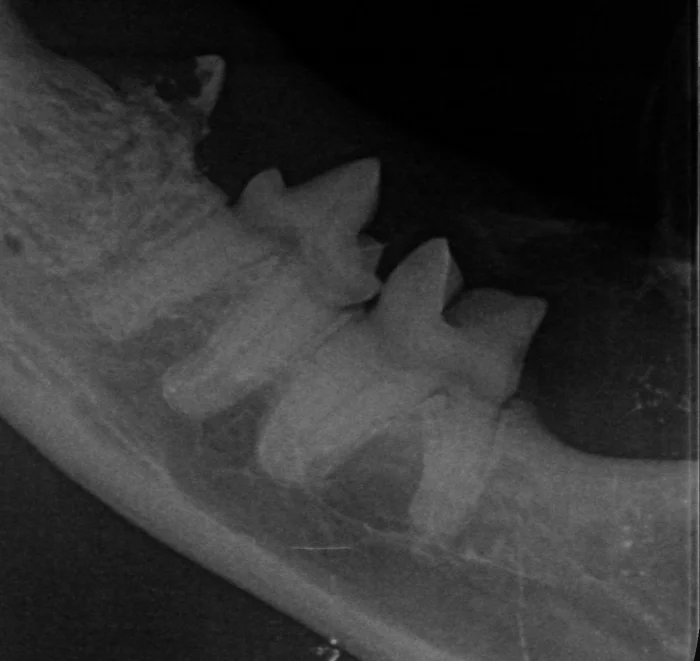
Dental X-rays are the most important diagnostic tool in dentistry. Over half of dental diseases are invisible on visual examination — root infections, tooth resorption, cysts and bone loss are only revealed on radiographs. At our clinic, all teeth are radiographed with digital dental X-ray as part of every dental treatment (€59–99).
How does the procedure work?
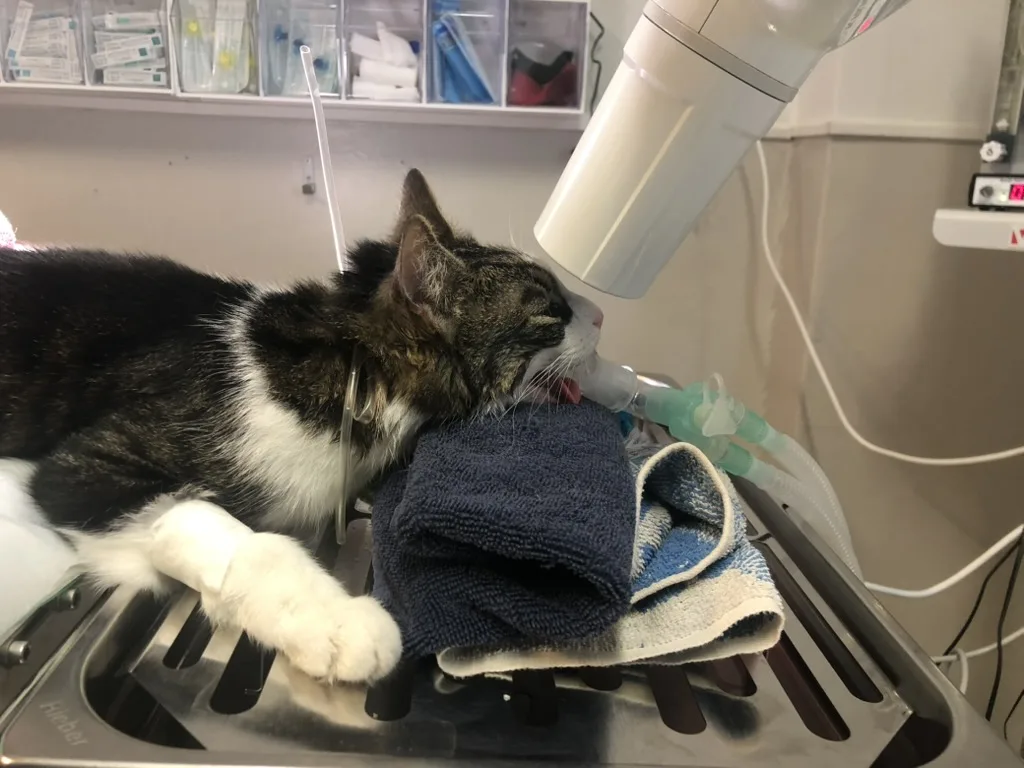
Before the procedure, a health check and blood tests are performed as needed. Adult dogs and cats are fasted 8–12 hours before anaesthesia (water until the morning). The procedure is carried out under inhalation anaesthesia with comprehensive pain relief, and during anaesthesia we continuously monitor heart rate, oxygen saturation, blood pressure and temperature. Tartar is removed, dental X-rays are taken, diseased teeth are treated, and damaged teeth are extracted if necessary. Patients are typically discharged the same day. Read more about anaesthesia safety.
Common dental diseases in dogs and cats
Periodontitis — inflammation of the tooth-supporting tissues — is the most common dental disease and leads to tooth loss and chronic pain when advanced. Tooth resorption is particularly common in cats, where the tooth structure breaks down from within — often invisible on visual examination and very painful. Fractured teeth (especially canines) predispose to root infections. Retained deciduous teeth when permanent teeth erupt cause alignment problems, especially in small dog breeds. Each of these conditions can be diagnosed and treated at our clinic.
Home dental care — prevention starts at home
Regular tooth brushing is the most effective way to prevent tartar buildup and gingivitis. Start by gently getting your pet used to fingers and a pet-specific toothpaste — human toothpaste is not suitable for animals due to fluoride and xylitol content. Daily brushing is the goal, but 2–3 times per week already produces meaningful results. VOHC-certified chew products and dental diets complement home care. Note, however, that home care does not replace professional teeth cleaning, which can only be performed under anaesthesia.
Recovery after dental care
Patients are typically discharged the same day and can be collected in the afternoon. Soft food is recommended for 1–3 days, especially if teeth have been extracted. Take-home anti-inflammatory pain medication is provided when needed, along with instructions for use. Most pets return to normal eating and play within 24–48 hours. If teeth have been extracted or gum procedures performed, a follow-up appointment is scheduled for 5 days later to verify healing.
Frequently asked questions about teeth cleaning and dental care
How much does dog teeth cleaning cost? Dog teeth cleaning (scaling) at Saari Animal Clinic costs €303 (under 20 kg) or €353 (over 20 kg), with a €50 surcharge for dogs over 40 kg. The price includes general anaesthesia, ultrasonic scaling, an oral examination and a dental chart. Dental X-rays are taken with the treatment, €59–99.
How much does cat teeth cleaning cost? Cat teeth cleaning costs €263. The price includes general anaesthesia, scaling, an oral examination and a dental chart. Dental X-rays (€59–99) are taken with the treatment.
How much does a dog or cat tooth extraction cost? Permanent tooth extractions have no fixed price. The price is set after the clinical examination and X-rays and depends on the number of teeth, the number and condition of the roots and the time required. You receive an estimate before the procedure. Deciduous tooth removal costs €453 (1–2 teeth) or €533 (3–4 teeth).
Can a dog's teeth be cleaned without anaesthesia? Not properly. On an awake animal only the visible tooth surface can be cleaned — the area below the gum line, where the disease starts, cannot be reached, and the mouth cannot be examined or X-rayed. Anaesthesia-free cleaning is cosmetic and does not treat the disease. That is why all dental treatments at our clinic are done under general anaesthesia with continuous monitoring of vital signs.
When should a dog have its teeth cleaned? When there is visible tartar, the gums are red or the breath smells bad — gingivitis has then already begun. For dogs and cats over 3 years we recommend a yearly dental check (awake, €32), earlier for small breeds. At the check we assess whether a cleaning is needed and whether any teeth need extracting.
How long does teeth cleaning take? Teeth cleaning with X-rays usually takes about 1–2 hours. Extractions extend the procedure. Your pet is dropped off in the morning and usually collected the same afternoon.
How do I know if my pet needs dental care? Signs of dental disease include bad breath, tartar, red gums, difficulty eating and drooling. We recommend a dental check during the consultation — problems often go unnoticed from the outside.
How does a dog recover from a tooth extraction? Most pets eat and play normally within 24–48 hours. Soft food is recommended for 1–3 days, pain medication is sent home, and dissolvable sutures disappear on their own. A follow-up visit is booked about 5 days later to confirm healing.
Can I brush my pet's teeth at home? Yes, and it is the most effective form of home care. Always use toothpaste designed for pets — fluoride and xylitol in human toothpaste are toxic to animals. Start gently with a finger, then progress to a soft children's toothbrush or a special pet toothbrush. Daily brushing gives the best protection, but 2–3 times a week already helps significantly.
When should retained baby teeth be removed? If the permanent teeth have erupted but the baby tooth is still in place (persistent baby tooth), it can cause dental misalignment and inflammation. They are usually removed during spay or neuter surgery, while the dog is already under anaesthesia — this avoids a separate anaesthesia.