

In cats, inflammatory bowel disease (IBD) and low-grade intestinal lymphoma are notoriously hard to tell apart. Both mainly affect middle-aged and older cats; low-grade lymphoma is very uncommon before 8 years of age. Signs include weight loss (the most common sign), vomiting, diarrhea, and changes in appetite. They can be mild, and diarrhea may be absent. The distinction matters because treatment and prognosis can differ: IBD is managed with diet and, if needed, corticosteroids, whereas low-grade lymphoma usually also needs oral chemotherapy.
Why the Two Are So Difficult to Tell Apart
Under the microscope, low-grade lymphoma and the lymphocytic-plasmacytic form of IBD can look very similar: in both, small white blood cells (lymphocytes) infiltrate the intestinal lining. Pathologists’ assessments of the same intestinal biopsies can also vary considerably. Furthermore, inflammation and lymphoma often coexist: concurrent inflammation has been found in up to 60% of cats with low-grade lymphoma. It has therefore been proposed that long-standing inflammation may, in some cases, progress to lymphoma — but this has not been proven. The two may not be entirely separate diseases, but rather points on a continuum.
Diagnosis Requires Advanced Methods
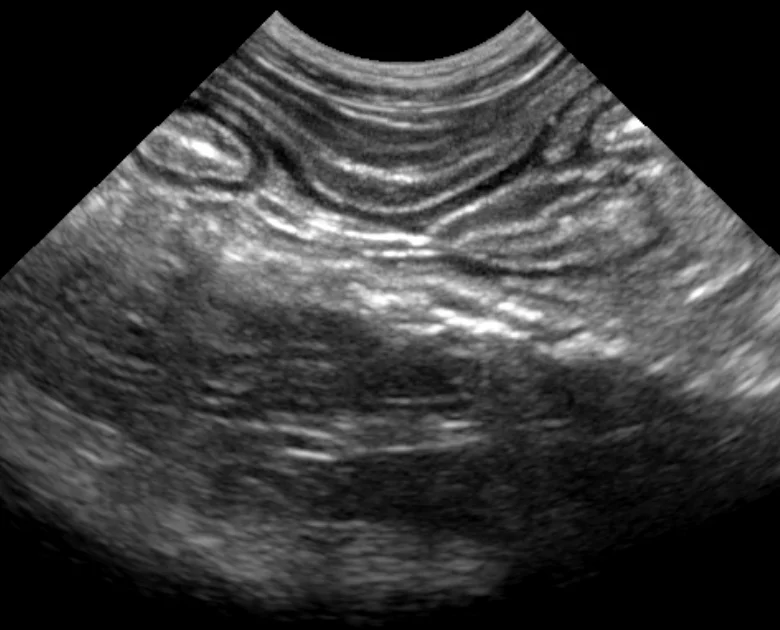
Blood, urine, and stool tests rule out other causes of the signs, such as an overactive thyroid, but cannot distinguish the two. Ultrasound helps plan biopsies but cannot reliably tell IBD from lymphoma, and a normal scan does not rule out disease. A diagnosis requires intestinal biopsies. These can be taken with an endoscope or surgically, and we perform both at our clinic. Neither method is clearly superior, but surgery also gives access to the middle part of the small intestine (the jejunum), which is often affected yet largely beyond the endoscope’s reach. Microscopic examination of the tissue (histopathology) is the cornerstone of diagnosis, but it is not always conclusive. Immunohistochemistry stains cell markers (e.g., CD3 and CD20) to identify the type of lymphocyte — about 90% of low-grade lymphomas arise from T cells. It also shows whether the cells are uniform (typical of lymphoma) or mixed (typical of inflammation) — a helpful clue, not proof. PARR clonality testing, a DNA test, shows whether the lymphocytes are copies of a single cell (monoclonal, suggesting lymphoma) or come from many cells (polyclonal, suggesting inflammation). It must not be used on its own: in one study, 70% of cats with inflammation had a clonal or partly clonal result, and lymphoma-like findings have even been detected in healthy cats. No single test is decisive; the diagnosis rests on all the findings taken together.
Treatment and Prognosis
IBD is managed step by step: first with a diet trial using a hydrolyzed or novel-protein food, which on its own helps many cats, and then with prednisolone if needed. Low-grade lymphoma is usually treated with oral chemotherapy (chlorambucil plus prednisolone), which is generally well tolerated but requires regular blood tests. In published studies, 69–96% of cats responded to treatment, and median survival ranged from about 15 months to over 3 years; some cats lived more than 5 years. In both conditions, vitamin B12 is supplemented if levels are low. High-grade lymphoma needs more intensive chemotherapy and has a far poorer prognosis (in published studies, median survival is roughly 1.5–9 months).
Why an Accurate Diagnosis Matters
If lymphoma is treated as IBD, prednisolone — part of the treatment for both — may ease the signs for a while. A good response to steroids therefore does not rule out lymphoma. Other immunosuppressants, such as cyclosporine, may worsen an undetected cancer. Cyclosporine’s veterinary product information states that it must not be used in animals with current or past cancer. Conversely, treating IBD with chemotherapy exposes the cat to unnecessary side effects. Biopsies also help rule out other causes, such as high-grade lymphoma or certain infections. We recommend a thorough workup whenever the cause is unclear — please contact our clinic.
Sources
- Marsilio S. ym. (2023): ACVIM consensus statement guidelines on diagnosing and distinguishing low-grade neoplastic from inflammatory lymphocytic chronic enteropathies in cats. Journal of Veterinary Internal Medicine 37(3):794–816. pmc.ncbi.nlm.nih.gov/PMC10229359
- Paulin M.V. ym. (2018): Feline low-grade alimentary lymphoma: an emerging entity and a potential animal model for human disease. BMC Veterinary Research 14:306. pmc.ncbi.nlm.nih.gov/PMC6180644
- Freiche V. ym. (2021): Histopathologic, phenotypic, and molecular criteria to discriminate low-grade intestinal T-cell lymphoma in cats from lymphoplasmacytic enteritis. Journal of Veterinary Internal Medicine 35(6):2673–2684. pmc.ncbi.nlm.nih.gov/PMC8692189
- Marsilio S. ym. (2019): Results of histopathology, immunohistochemistry, and molecular clonality testing of small intestinal biopsy specimens from clinically healthy client-owned cats. Journal of Veterinary Internal Medicine 33(2):551–558. pmc.ncbi.nlm.nih.gov/PMC6430868
- Willard M.D. ym. (2002): Interobserver variation among histopathologic evaluations of intestinal tissues from dogs and cats. Journal of the American Veterinary Medical Association 220(8):1177–1182. pubmed.ncbi.nlm.nih.gov/11990964
- Barrs V.R., Beatty J.A. (2012): Feline alimentary lymphoma: 2. Further diagnostics, therapy and prognosis. Journal of Feline Medicine and Surgery 14(3):191–201. pmc.ncbi.nlm.nih.gov/PMC10822435
- Makielski K. ym. (2019): Narrative review of therapies for chronic enteropathies in dogs and cats. Journal of Veterinary Internal Medicine 33(1):11–22. pmc.ncbi.nlm.nih.gov/PMC6335544
- Pope K.V. ym. (2015): Outcome and toxicity assessment of feline small cell lymphoma: 56 cases (2000–2010). Veterinary Medicine and Science 1(2):51–62. pmc.ncbi.nlm.nih.gov/PMC5645816
- Kiselow M.A. ym. (2008): Outcome of cats with low-grade lymphocytic lymphoma: 41 cases (1995–2005). Journal of the American Veterinary Medical Association 232(3):405–410. pubmed.ncbi.nlm.nih.gov/18241108
- Lingard A.E. ym. (2009): Low-grade alimentary lymphoma: clinicopathological findings and response to treatment in 17 cases. Journal of Feline Medicine and Surgery 11(8):692–700. pmc.ncbi.nlm.nih.gov/PMC11132580
- Stein T.J. ym. (2010): Treatment of feline gastrointestinal small-cell lymphoma with chlorambucil and glucocorticoids. Journal of the American Animal Hospital Association 46(6):413–417. pmc.ncbi.nlm.nih.gov/PMC3092124
- Moore P.F. ym. (2012): Feline gastrointestinal lymphoma: mucosal architecture, immunophenotype, and molecular clonality. Veterinary Pathology 49(4):658–668. pubmed.ncbi.nlm.nih.gov/21505197
- Collette S.A. ym. (2016): Treatment of feline intermediate- to high-grade lymphoma with a modified University of Wisconsin-Madison protocol: 119 cases (2004–2012). Veterinary and Comparative Oncology 14(Suppl 1):136–146. pmc.ncbi.nlm.nih.gov/PMC5012421
- Health Products Regulatory Authority, Ireland (2023): Atopica 100 mg/ml oral solution for cats and dogs — summary of product characteristics, sections 3.3 and 3.5 (EU decentralised procedure IE/V/0881/001, which also covers the Finnish authorisation). assets.hpra.ie